

ed #6: Raising Ourselves
Bare HEARTS: Q&A with writer, parent coach & mom Erin Miller


“Parenting is a long becoming. So is growing up. Grace belongs to both.” Erin Miller
Hi all and welcome to another edition of Bare HEARTS, a new Q&A series where we speak about self-love, well-being, core values, relationships, and personal responsibility.
Bare HEARTS because we are so exhausted of holding up the pretty presentation. It is like we are all waiting for someone to come and tell us that it is okay to get super transparent and just be. This is the place. This is our okay.
Holding space for honest conversation & love as we grow with one another.
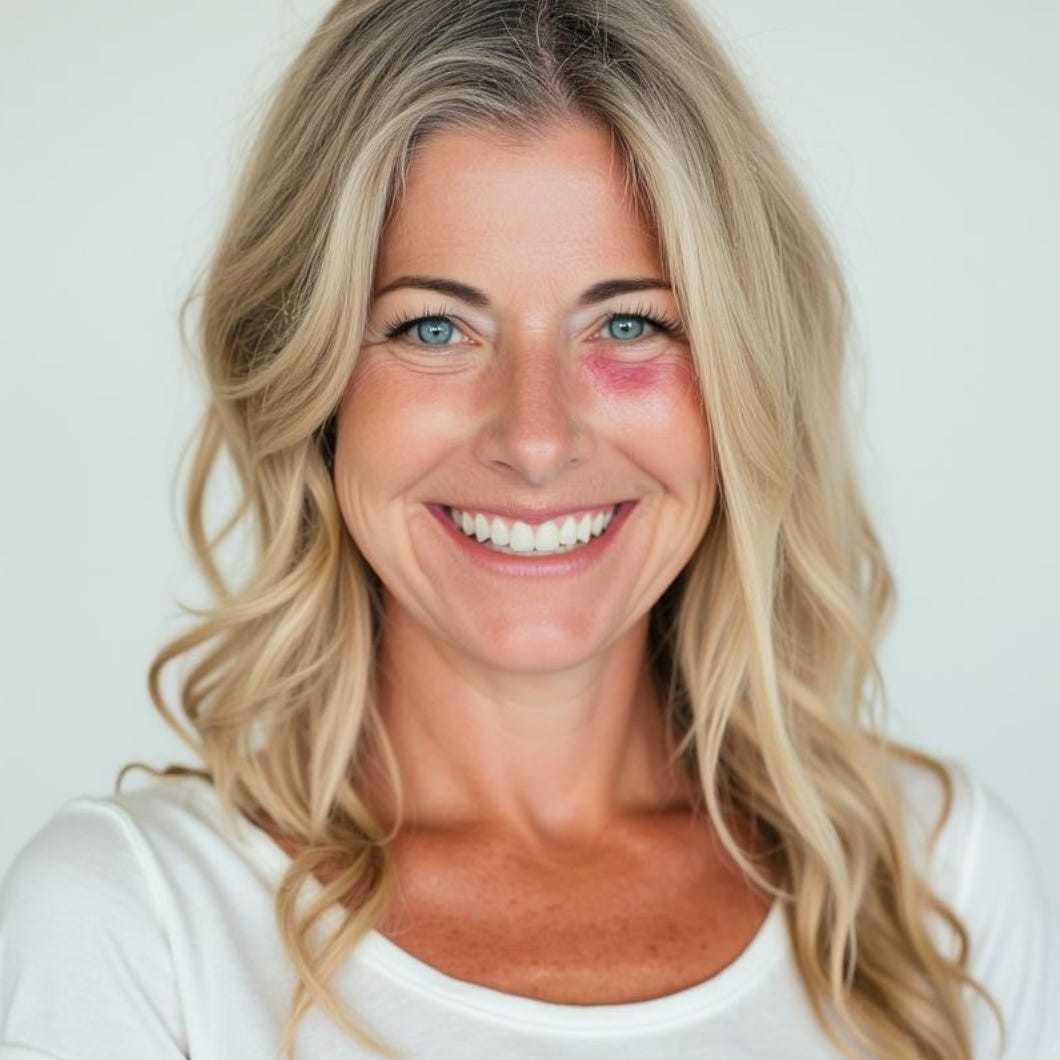
Erin Miller is the writer of unpopular PARENT, where she writes for parents who want to raise kids who feel secure, seen, and strong enough to step into the world as themselves. A former teacher and solo mom of two almost-grown daughters, she brings more than 20 years of experience in education and mental health to her writing and coaching.
Her philosophy is simple: Parents who show up as their best selves raise kids who trust both their footing and their freedom. Erin doesn’t tell you how to fix your kid—she writes about us, the parents. How we can show up clearer, steadier, and more ourselves, so home feels like a place we (and our kids) want to be.
Alongside her newsletter, Erin curates PARENTreads, a twice-monthly digest of diverse parenting voices, and hosts PARENTstack, a directory of 125+ essential parenting Substacks.

What I love about Erin…
I just recently discovered Erin, but it took little to no time to feel a deep connection with her as a devoted mom of two adulting daughters, and way beyond.
I love that she considers mutual respect a fundamental element of a strong and healthy parent-child relationship. And with this, honest conversation, listening, and responsabilizing.
I love that she challenges the system and the cultural pressures put on parents and kids; she promotes the return of core values instead.
I love that she focuses on her own growth as the basis of great parenting - that we do not have to have it all figured out, actually we shouldn’t.
Most of all, I love that her work is just as much the basis of being a loving human living on this planet as it is in being loving within our homes.
Time to get to know her better. Here is…

Starting strong here: What part of your life needs the most love right now?
Connection. That’s the part of my life that needs the most love right now.
Over the past few years, I’ve intentionally stripped away a lot—relationships, obligations, distractions. It wasn’t out of bitterness. It was a realignment, a need for clarity.
And that season was good and completely necessary, but I’ve been in it long enough to know I’m ready for something else now. I’m ready to add back in.
I want people in my life who know how to sit in the middle of things—who aren’t afraid of depth or tenderness or truth. Real connection.
I’ve done the work to clear space. What needs love now is whatever—and whoever—is meant to come next.
You have been a single mom for 10 years, and a full-time mom for the last four. That is so challenging. What surprising thing have you learned about yourself during this experience?
The first few months after the breakup were brutal. Not just emotionally, but spiritually. It didn’t feel like the end of a relationship—it felt like the collapse of something I’d built my whole identity around. My mom put it best: it was the death of a dream.
I didn’t grow up dreaming about a certain career or accomplishment. I dreamed about being a mom. And in that dream, there was a loving partner, a stable home, a sense of wholeness. So even though I think I started grieving the marriage while still in it, what I hadn’t faced was the loss of the picture I had carried in my mind for so long.
What surprised me most, though, was how much strength showed up after I let go. I had to accept that the version of family I thought we were supposed to be... was already gone. And in its place was something free and full of potential.
The biggest lesson for me has been about release—and with it, a kind of flexibility I didn’t know I had. This isn’t the life I planned for, but it’s the one that’s let me grow into the person—and the mother—I was actually meant to be.
And in that way, maybe loss isn’t always the end. Sometimes it’s the invitation to finally live.
(‘This isn’t the life I planned for, but…’ - This will resonate with many. For me, this led to: I don’t have everything I wanted, and yet I do.)
What’s one thing you’ve stopped pretending you’re okay with?
Dishonesty—both in myself and in others.
I hold to a line I once read in M. Scott Peck’s People of the Lie: Where there’s confusion, there’s a lie. ‘When I feel tangled, I ask if I’m being fully honest—or if I’m sensing something that isn’t. If it’s mine, I own it. If it’s not, I step back and make space.’
(my heart beats for this answer)
I don’t believe that I need to ask you what your greatest motivation is. As for myself, and many parents, our ‘why’ is our kids; we want to become our best for them. Are you at a point in your journey where you can truly say, ‘I love my whole self’?
I wish I could say yes. I’ve worked hard, I’ve grown a lot—but no, I don’t fully love my whole self. Not yet.
I like who I am. There are qualities I love—my grit, my instincts, the way I show up for my girls. But there are parts of me I haven’t had the time or space to tend to.
But I’ve made peace with slow progress. I’ve learned to give myself room to be in process without beating myself up. These days, I focus on steady movement—just a bit more acceptance, day by day.
Our kids mirror us. We are not always going to be the best reflection for them. We are human. What is the thing about yourself that you most fear(ed) passing on to your two daughters? Talk about it.
For a long time, I outsourced my validation and decision-making. I looked to other people to tell me who I was, what I should do, what was right. It’s taken a lot of time—and the help of a brilliant, compassionate therapist—to begin unraveling that.
And I’ve feared, less so now but still sometimes, passing that on to my daughters—that they might learn, by watching me, to doubt themselves too.
I’ve tried to be direct and honest with them, acknowledging “I’m not great at this, but I’m working on it.” Not so they’d cut me slack, but so they’d know that I knew and I was working to change it.
At the same time, I’ve been intentional about encouraging them to trust themselves. I say things like:
“What’s your gut telling you?”
“What feels aligned with who you are?”
“What choice lets you sleep well tonight?”
“Lean fully into yourself.”
I’ve probably been talking to myself as much as I’ve been talking to them. But I’ve watched them take it in and live it out. And they make decisions from a place of internal clarity that still feels new to me.
In that way, we’ve grown through this together. My hope was always that they’d see me doing the work, hear the things I wished I’d heard, and stand on my shoulders. And I think they are. It looks more natural in them. They don’t have to fight for it the way I did.
That’s the gift in all of this—doing the work not just for myself, but so they might not have to unlearn the same things.
Again, we are human; besides for the external pressures of parenthood, we carry our childhood wounds with us. Even if we have the best intentions and devotedly work on ourselves, I personally believe that every parent is going to break their kids to some degree no matter what. Do you agree? Also, I am currently reflecting on the idea that the ‘unlearning’ is painful, but also necessary and valuable for all of us. If we could instill only one core value to help our children ‘unlearn’ and also protect themselves from using our mess ups as a lifetime crutch which one would you choose?
That’s an interesting question. I’ve felt broken before—even wondered if I was beyond repair. But over time, I’ve realized that the moments I felt most shattered were also the times I was strongest.
That’s why I’m not sure I believe we actually “break” our kids—not unless they give us that power. And if I’ve done anything right as a parent, I hope it’s that my daughters know they never have to give that power away. Not to anyone, including me.
One of the most valuable ideas I’ve adopted originates from Brené Brown: you’re not always responsible for what happens to you, but you are responsible for how you respond to it. If there’s one core value I’d want my girls to carry, it’s that.
Life will hand them hard things. I might even be one of those hard things at times. But they still hold the pen. They get to write the meaning. They get to choose what it becomes in them.
(l love how you express this. This gets me thinking that it isn’t a break, but a breaking through, and this feels more positive and empowering; it feels like a natural process of learning and growing. Thank you.)
From what I can tell, I believe that you are very accepting of your ‘mistakes’; you see everything as an opportunity to learn and grow instead of drowning in regret. But if you could travel back in time, for what specific parenting challenge would want to be given a do-over?
My marriage essentially fell apart about eight years before I filed for divorce. My girls were babies at that time. And even though I stayed, my energy and focus went almost entirely into that relationship—trying to make it work, trying to hold it together, trying to manage the fear and uncertainty.
I worked overtime to control the appearance of things. From the outside, it looked stable. But inside, everything was cracking, and I didn’t have much left over for my girls. So they got the most stressed-out, distracted, survival-mode version of me.
I also think I put unfair pressure on them without realizing it. I needed everything to look okay, and they became part of that performance. I expected them to behave a certain way—to be easy, polished, well-regulated. There was almost no room for them to be messy, silly, loud, or just… kids.
Our home felt like a pressure cooker to me. I can only imagine what it felt like to their sweet souls and little nervous systems.
If I could change something, it would be that. I’d take off the mask sooner. I’d let the illusion fall apart faster. I’d protect their light instead of the image. I’d choose ‘presence over performance,’ even if it cost me the picture I was clinging to.
(This is so beautifully honest of you, and although I am still married, much of what you describe of yourself resonates with me. This trying to hold it together and making that your main focus. We can't go back, but honesty allows us to move torwards better.)
What is your go-to personal mantra?
Next right step. It doesn’t have to be more than one. But it can never be less.
One of the most challenging things in parenting is knowing when to step in and when to step away. Do you have any advice about this? Can you give us an example of this in your own life?
I don’t think this tension ever fully goes away—knowing when to step in and when to step back.
I’ve always been a big believer in letting kids practice while they’re still under our roof. Practice making decisions. Practice getting it wrong. Practice learning how to recover. It gives them a chance to build confidence—and it gives us a chance to practice trusting them.
By the time my girls moved out, they were already making their own decisions. I’d seen them do it enough to know they were good at it.
That doesn’t mean there haven’t been missteps. Just this week, my youngest and I were talking about what it means to have realistic expectations as she settles into this first season of independent living. It’s unreasonable—for either of us—to expect her to be an expert. She’s never done this before.
But she knows herself well. She’s done the work. And I trust her to steer, even when the path is unfamiliar.
I also trust both of my girls to get back on track when they veer off course. They’ve practiced that, too. They know I’m here if they need me. And because we’ve had so many conversations over the years where I’ve said, “I can step in if and when you need me, just say the word,” they know I mean it.
I’m available. I’m willing. But I generally won’t insert myself unless I’m invited.
With one exception: if their choices ever ask me to compromise my own values, I’ll speak up. Not to lecture or shame them—but to be honest about what I need in order to stay in alignment with myself.
I had this exact conversation with my oldest about a year ago. It turned out to be one of the most transformative moments in our relationship. I was able to express my love and support for her, and draw a boundary around how I needed to show up. It wasn’t about controlling her—it was about my own clarity. And she felt that—and told me so later. I think it was a pivot point in forming our adult-to-adult relationship, and it brought us even closer.
(communication, communication, communication 🙌 )
This letting go… You teach us that our goal as parents is to prepare our kids to be able to go out independently into the world. We are both very much in this stage of motherhood right now. Like you, I experience it as a moment of growth for myself. But, let’s face it, change is one of the most difficult things we deal with as humans; it is very often experienced as loss. Have you been preparing yourself all along as well? If so, how? Is there anything important that you feel like you are gaining from this period of transition?
I’m not sure where it came from, but I’ve always known my job was to raise them to leave. To help them become contributing, self-knowing humans who could move through the world in a way that felt aligned with who they are. So in a lot of ways, this season—being an empty-nester—has felt more like a victory than a loss.
My oldest is a ‘do-er’, a risk-taker, fueled by social interaction and she jumped into college with both feet—whole body, really. She hasn’t let a single opportunity pass her by. And watching her become the fullest version of herself has made the transition easy. If she were here with me, she’d be missing out on the life that’s meant for her.
My youngest just left, so it’s a little more raw. We’re very compatible, and we’ve had a blast together these last two years. I miss the five-minute debriefs that somehow turned into two-hour deep dives on the meaning of life. And I miss her friends coming and going from the house. I loved that part of this season so much.
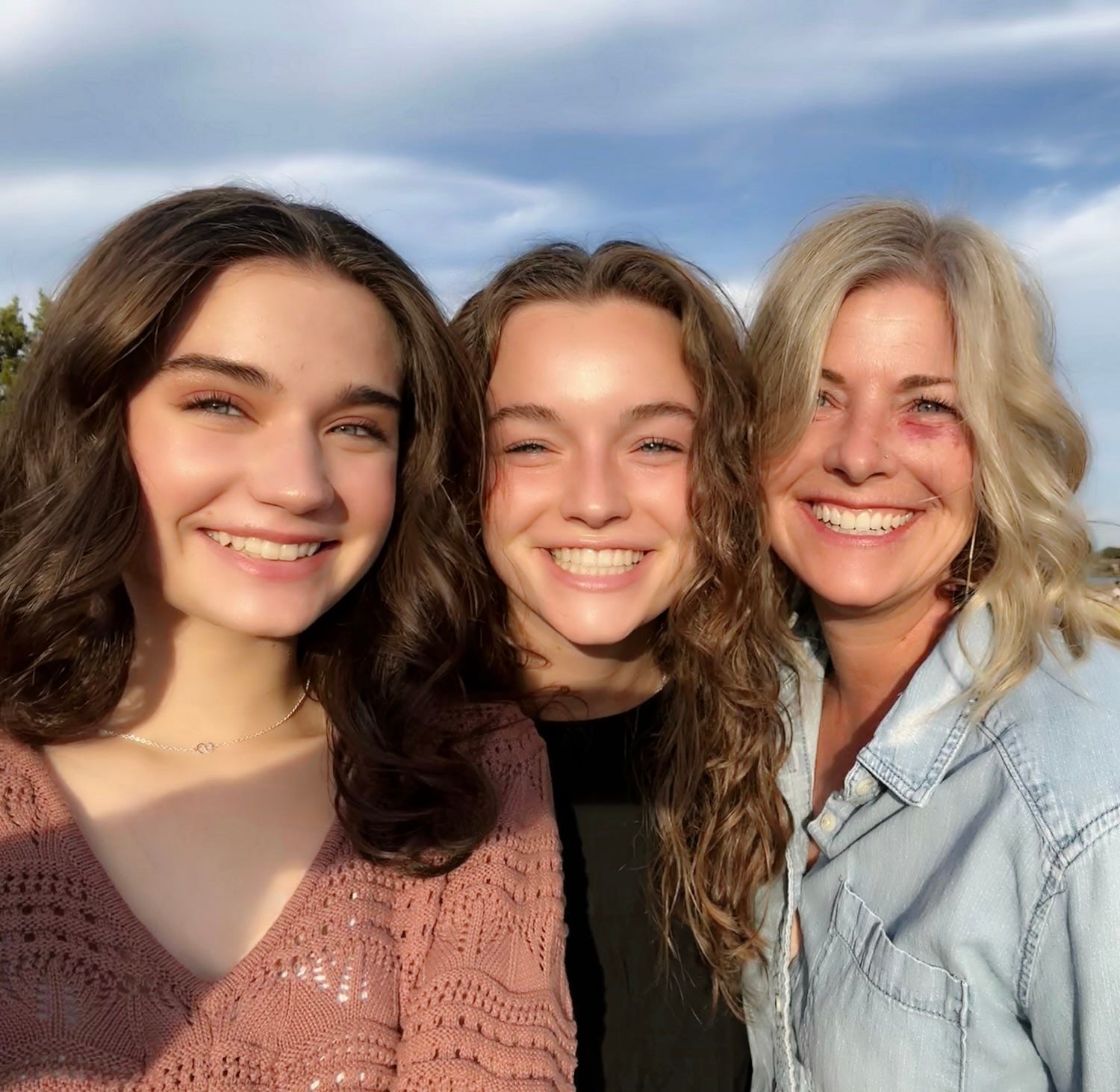
But I’m also very aware of what’s been neglected in me—and in my life. Now I get to tend to that. In some ways, I get to redesign my life all over again. And I’m reminded that while starting over can be hard, it’s also a gift.
Nothing about this next chapter is decided for me. I get to decide it.
That’s the work I’m doing now. And it feels good. And healthy. And hard-earned. And won.
I often say that being a mom is my main job and it is one that I am extremely proud of. However, we aren’t only moms; we are also women. How have you protected this, prevented your sense of self from being swallowed up by the momma role? Maybe what I am also asking is when you aren’t a mom, who are you? What brings you personal joy?
I almost skipped this question because I don’t feel confident answering it. But maybe that’s exactly why I should.
So much in me went dormant, and now I’m bringing pieces back to life. I think a lot of mothers land here—so focused on “mom” that we forget who else we are.
Lately, I’ve been trying things on again: painting, cooking what I love, leaving plans open, rediscovering what feels like me. I’ve started asking both big questions—like what I want my life to look like in five years—and small ones, like whether I’m still a night owl and just became an early bird out of necessity.
I’m not who I was when I tucked these parts of myself away, and I’m not trying to go back. But I am trying to stay open. To what fits now. To what’s new. To what might surprise me.
I’m in a season of exploration. Beginning again.
When you are in The Land of Overwhelm what does a moment of self-care look like?
Solitude—in any form.
You wrote something like: When you are certain about something, know that you are on the wrong path. Talk to us about the dangers of certainty, not only as a parent, but in general.
Every time I’ve been absolutely certain about something, I’ve eventually been humbled by it.
That’s how I learned to stop trusting certainty so much. It makes me rigid. It keeps me from listening. It convinces me there’s nothing left to learn.
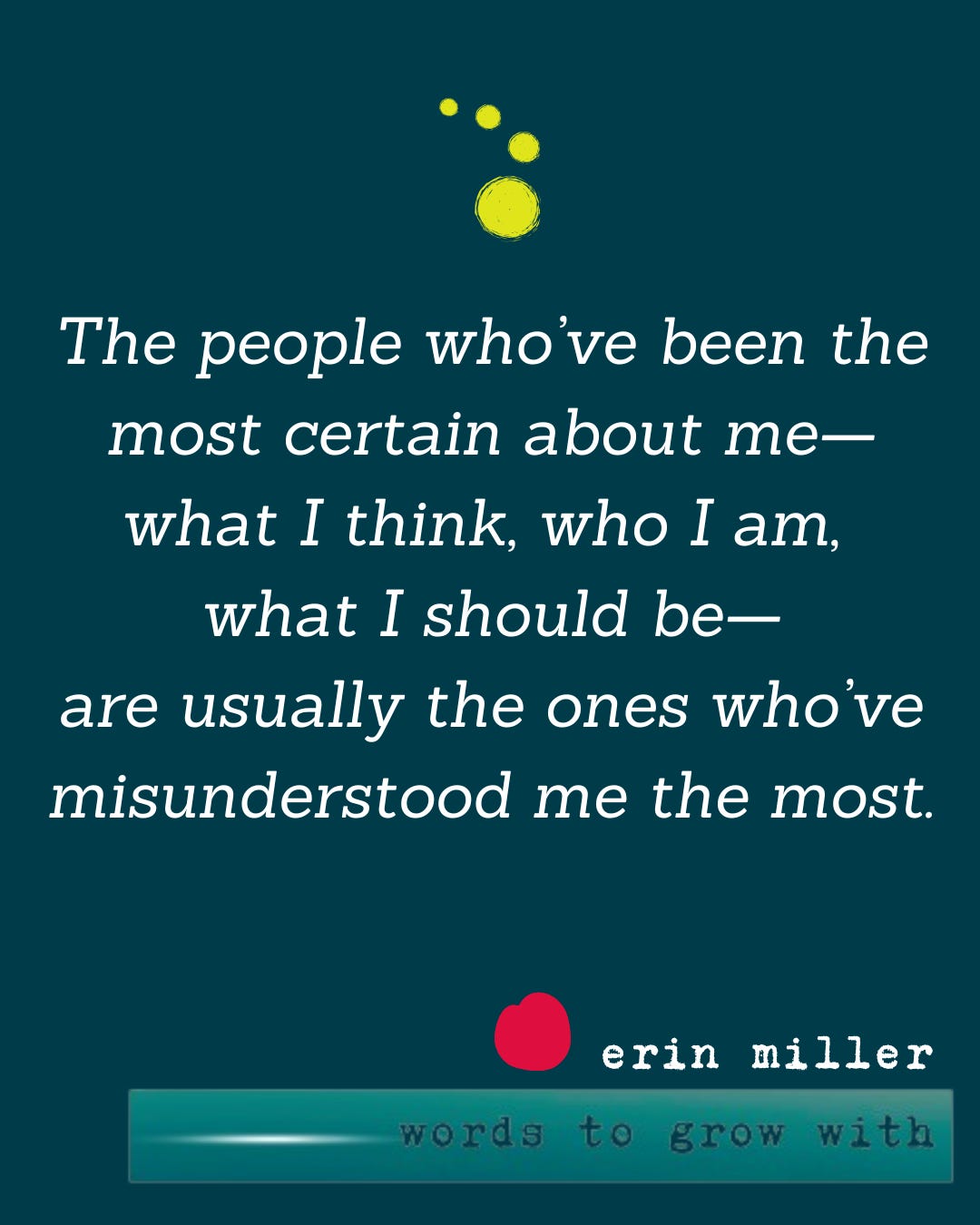
I think part of that comes from being on the receiving end of it. The people who’ve been the most certain about me—what I think, who I am, what I should be—are usually the ones who’ve misunderstood me the most.
The ones who ask questions, stay open, stay curious—those are the people I feel safest with. The most known. The most loved.
I’ve come to see certainty as a kind of stagnation. If I’m growing—and I hope I always am—then learning has to be part of that. And learning requires curiosity, openness, movement.
New information shows up. Life throws something unexpected at me. I experience something that shifts my perspective. All of that pushes me forward—sometimes in progress, sometimes off-track, but forward either way.
That’s true in relationships, too. The people closest to me are the ones who value growth. We evolve alongside each other. That’s what keeps the connection alive.
Certainty kills curiosity. And when curiosity goes, connection evaporates.
In fact, just this week, my youngest was in a typical disagreement with my oldest. It would’ve been easy for her to say, “That’s just who she is.” But instead, my youngest stayed curious and had a realization about how deeply her sister feels things. And because I’m curious about both of them, I got the gift of being let in on the discovery—and now we both know how to love my oldest a little better.
On the flip side, just last week I received a two-sentence text offering feedback on something I’d written—90 seconds after I posted it, and four months after our last interaction. There wasn’t a single question in it. No curiosity. Just certainty. And the message landed exactly how you’d expect: disconnected, unhelpful, and a little arrogant.
In a recent letter, I wrote: “We are creating a world full of low-self esteem humans. Is there anything more dangerous?” What are your thoughts about this?
I love this perspective.
I’ve been thinking a lot lately about envy—and how much damage it does in the world. I hadn’t connected it so directly to low self-esteem, but you’re absolutely right. Envy is born from it. So are discontentment, scarcity, defensiveness, lack of generosity. Even closed-mindedness.
There’s also something else I see: a lack of emotional maturity and self-discipline—especially in adults. I’ve found myself, more than once, describing grown people as four-year-olds. Not to be cruel, but because that’s what unhealed, low-self-worth behavior often looks like.
When you don’t believe you’re enough, everything feels like a threat. Other people’s success, difference, even joy—it all becomes something to either mimic or destroy.
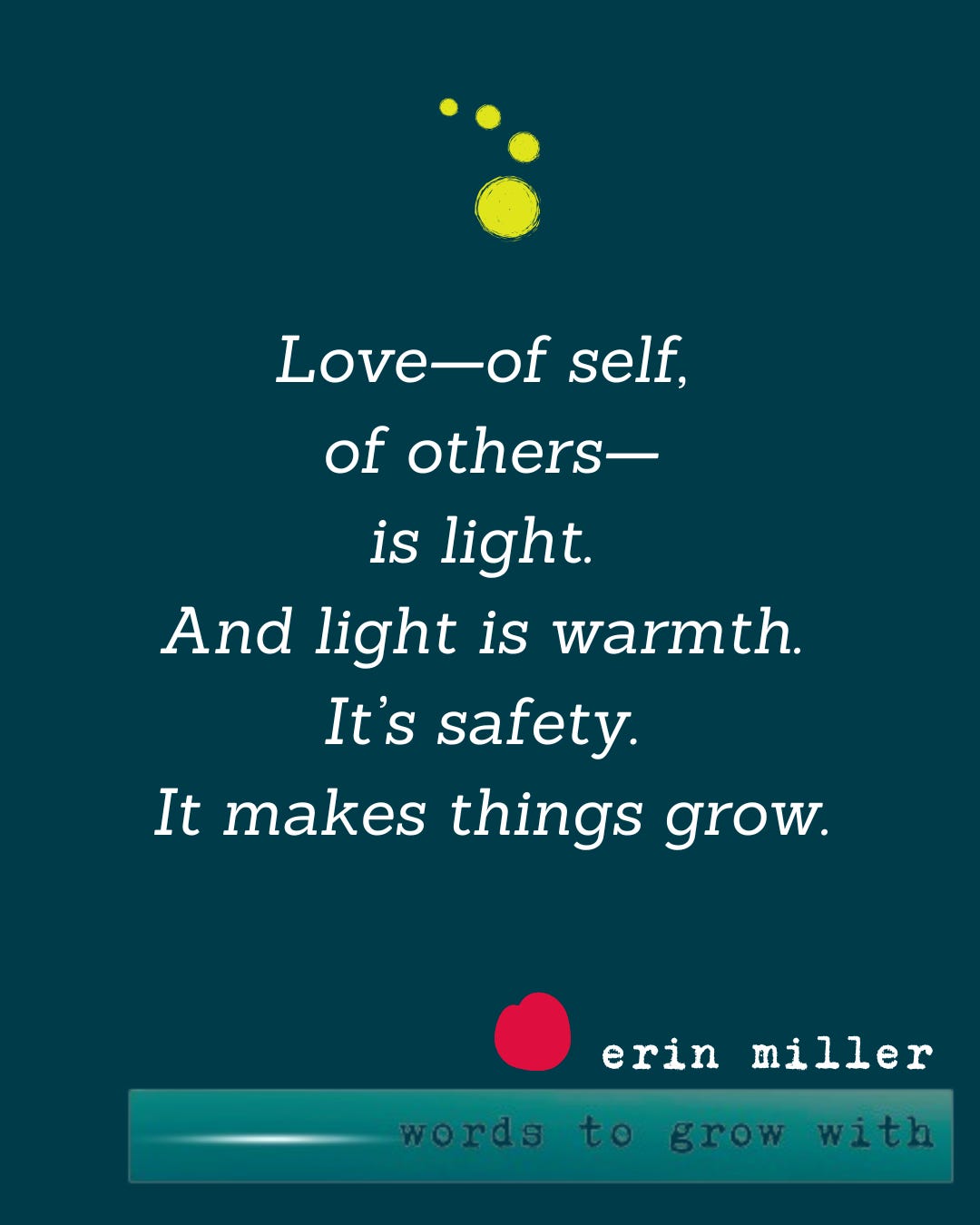
Love—of self, of others—is light. And light is warmth. It’s safety. It makes things grow.
But fear lives in darkness. And fear, at its root, is almost always tied to low self-esteem. That kind of fear breeds hate. It breeds violence. It keeps people small and angry and isolated.
We can’t afford to raise another generation in that kind of darkness. We have to do better—for our kids, yes—but also for the world they’re about to inherit.
I was speaking with Sage Justice about women and the trauma/denial (taboo) of sexual harassment and abuse. She believes that to some degree every woman, many unknowingly, have experienced this type of oppression in their lives. What are your thoughts on this, and how have you taught your own daughters the art of thoughtful discernment, how to protect themselves without living in mistrust, and how to be self-loving and confident enough to know when a person deserves their trust and when instead, it is time to speak up?
I’m not sure I’m comfortable speaking for all women, but I do believe many of us carry experiences of being dismissed, manipulated, or harmed in ways we’ve had to downplay just to keep moving.
With my daughters, I’ve tried to make one thing very clear: no one has the right to mistreat you. Not a teacher. Not a religious leader. Not a coach. Not even a family member. Titles, roles, and beliefs don’t earn trust—actions do.
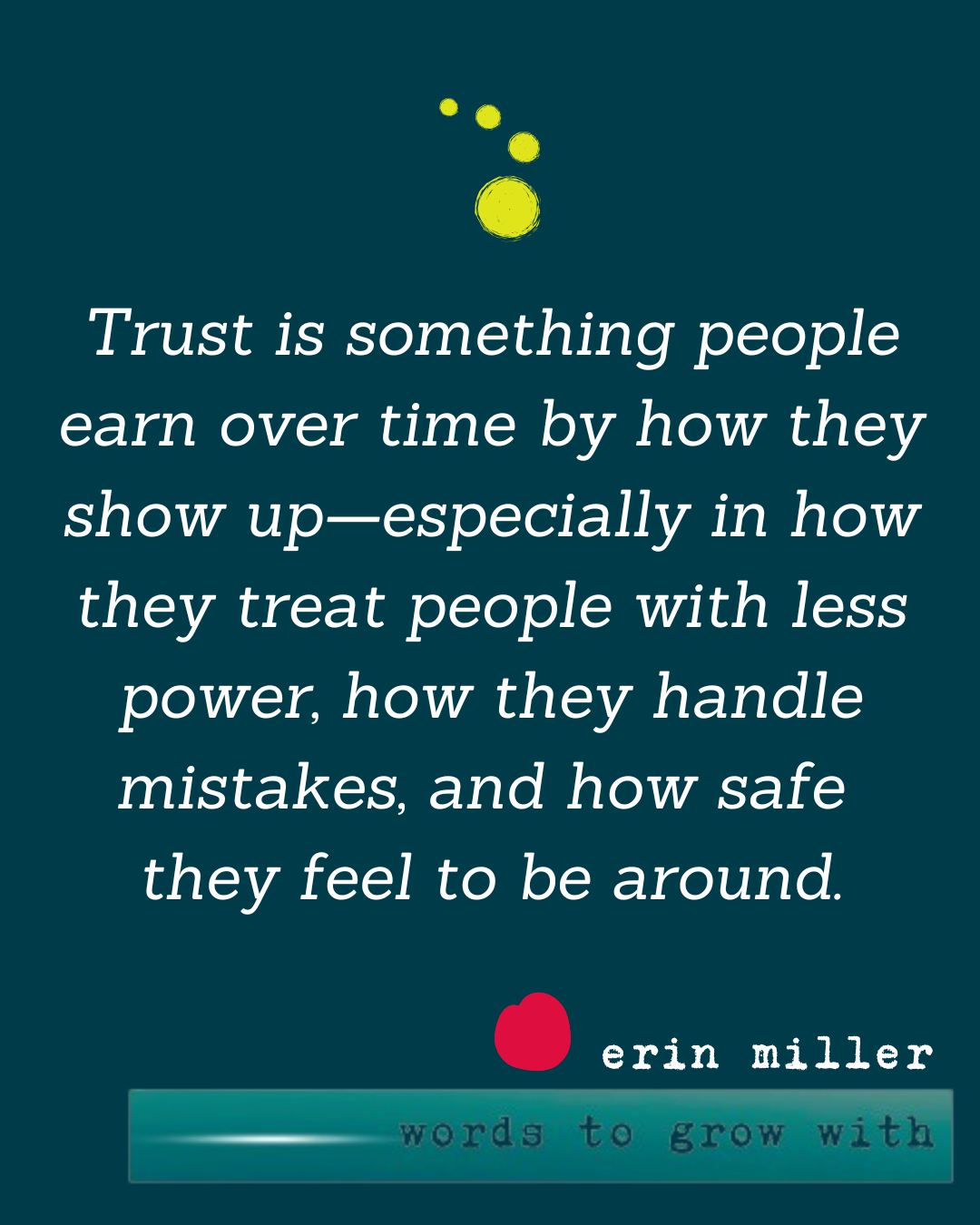
Trust is something people earn over time by how they show up—especially in how they treat people with less power, how they handle mistakes, and how safe they feel to be around.
From a young age, I’ve told my girls they have the right to stand up for themselves—and also the right to have a backup plan. We had a standing agreement with their pediatrician (who I trust completely): if there was ever anything they needed to share but couldn’t say out loud to me, they could ask for an appointment—no questions asked. We’d revisit that agreement every year at their well-check. It was just one way of making sure they knew they had options. That I trusted them. That I would believe them.
I’ve also had to evolve in how I parent around boundaries. Early on, I was big on not quitting. We followed through. We stuck things out. That was the culture in our home.
But over time—especially after walking away from my marriage—I learned there’s a big difference between giving up and choosing yourself.
Yes, there’s value in resilience and pushing through discomfort. But there are also moments when walking away is the healthiest choice you can make. And sometimes our intuition knows that before our logical mind does.
I want my girls to recognize that voice. To trust it. To know that discomfort isn’t always a sign to push harder—sometimes it’s a sign to pivot, speak up, or walk away.
And they’re allowed to do that, even if it makes other people uncomfortable.
Is there anything else about anything that you want to bare with us?
The world feels so heavy right now—I feel it too. And I catch myself wondering what to do with that. How to live in it without being swallowed by it.
Parenting has given me a lens for this. It reminds me that even in the hardest moments, there’s still beauty in shaping the next generation, still a chance to grow something good. But parenting is also a long game, and sometimes I find myself asking, What can I do in the meantime?
Lately, I’ve been paying attention to two things. One: Am I adding to the spaces I’m in, or detracting from them? And two: Am I bonding with people over what we love, or what we dislike? It’s not a formula, just a way of noticing.
I don’t have this figured out. I’m in process, same as everyone else. But I keep wondering how others are approaching it, too—how you’re finding small ways to make your family, your community, your world feel a little lighter and more hopeful.
End Note from me: These words feel like an end of year invitation: Let’s keep sharing and figuring it out or not figuring it out, but uniting nonetheless. This whole interview feels like a gift of love. Erin, thank you. Readers, thank you. My heart is full full full.

to keep the conversation going/self-inquiry prompt!
Like Erin, I am huge on doubting one’s beliefs in a healthy way; it promotes both growth and connection. I will go further - having absolute truths/certainties (and not doubting) is a major cause of much of the dis-ease, division, and violence we are all witnessing and experiencing. However, we can change this on a one human at a time level. It starts with devoting the time to get to know oneself in the most honest way, and in general, to be curious instead of judgmental.
Here are some questions to reflect upon:
What long held onto certainties as a parent and/or human being can you question (or are you already questioning) right now?
In today's world, how do you believe creating more space for questioning can positively influence our individual growth and the growth of humanity as a collective? Or do you disagree with this thought and why? Share this too.
What role has curiosity had in your loving journey?
Think, journal, create (if this inspires you to write an essay, tag us)… and please contribute to the conversation - share here.
If you enjoyed this interview with Erin Miller subscribe now to support her work at unpopular PARENT.
Your voice is so important here. Tell us what resonated with you the most or drop a question or comment for Erin here:
You grow with us. We grow with you. xo Danni
A few favorites for further reading with Erin Miller
The Unseen Weight of Parenting—and the Audacity to Set It Down
More Than Ours: The Parenting Trap That Keeps Us From Truly Knowing Who Our Kids Are
if you missed these from Bare HEARTS


*this new series was inspired by Jane Ratcliffe.
 | A guest post by
|