



“I’m always going to be a work in progress, but I can honestly say Kyle and I have both worked to change for the better and try to be the people we want our children to emulate.” - Mary Kate Shepard
Hi friends and welcome to part two of this special edition of Bare HEARTS. Today we speak with Mary Kate Shepard about the importance of parenting and cultivating core values starting from home.
*This is a continuation of our conversation with Mary Kate’s husband, Kyle Shepard. If you missed part one you can read it here.

Mary Kate is a licensed speech pathologist who chose to be a stay-at-home mother and homeschool teacher when their first child was born. Mary Kate recently started a column titled The Steady Home where she shares stories and lessons from her and Kyle’s experiences with parenting their four children.

DANNI: Mary Kate, in our conversation with Kyle, we spoke about life's challenges. Pretty early on in your relationship you experienced a miscarriage. Now here you are with four beautiful children. How did this early loss shift things, what did it strengthen?
MK: The loss of our first baby forced a past due maturity in our relationship. We were brand new to our second duty station across the world from our family and friends and suddenly we were forced to navigate this monumental sadness together.
Up until that point in our marriage, we were the happy-go-lucky couple. Spontaneous, free from any hindrances, fun-loving, and just generally living a very carefree lifestyle. We’d connect over having fun, drinking, traveling, and spending time with friends. Suddenly things felt like they got real really quickly. I fell into a spiral of despair and I desperately missed my baby. Kyle threw himself into his new position at the hospital and a new interest in MMA and Brazilian Jiu-Jitsu to distract himself from the pain of our loss. We became ships passing in our apartment. When we did connect, it was while drinking. We’d end up fighting, simply existing, then repeating the cycle.
It all came to a head one night after a particularly bad argument. I did what any heartbroken girl would do: I called my daddy. I was throwing together a carry on and ready to fly out of Guam and back home. My dad said words I’ll never forget: “Mary Kate, you can always come home. I’ll come get you, you know that. But I really think you need to stay there and work it out with your husband. Sleep on it tonight. Talk to him tomorrow.”
I did. It was the turning point we needed, but something had to change.
I reverted back to what the priest who married us said (who also happens to be my wonderful uncle!): “A speech pathologist and an audiologist… you two should have no trouble with communication.” But here we were, failing to communicate not two months since our wedding day.
I reached for God in those moments and I proposed that Kyle and I sit down at dinner each evening and do a couple’s devotion together. God was faithful; he saved our marriage. We began to connect again and realized that we were both hurting over losing our baby and dealing with it very differently. We began checking in with each other faithfully and deeply. Our first baby’s short existence here mattered: it forced us to grow up, and when we finally did, we were blessed with another positive pregnancy test a month later. And 9 months after that, our beautiful daughter Evelyn.
DANNI: MK, your first big act of resilience together. I love how your story reminds us of the importance of having a support system - not a crutch, but a presence that firmly holds and then sets free. The words of your wise daddy and uncle are priceless. This reminds me of my stepmom's words when I didn’t know whether to go back to the island for a man I spent only a week with, or forget him and continue with my law career and the life that was planned for me. She said, “I will support you either way. Do what your heart tells you. Remember that if you don’t go back, you will never know.” Everyone thought I was crazy. But I went back.
Bare HEARTS is very much about self-love. How has your family influenced your self-love journey?
MK: I think self-love has changed quite a bit for me since my younger years. I often thought that meant accepting and loving every imperfect aspect of myself. Or making myself “more” in order to finally feel “happy.” That’s a fruitless effort. It’s unobtainable because there will always be something lacking simply by the nature of our humanity.
But thankfully, and by the grace of God, I’ve grown to see this as more of a charity with self. The vocations of marriage and motherhood have both taught me that despite my shortcomings, I’m still a person worthy of love and respect. Owning my mistakes and giving myself a little grace don’t have to be mutually exclusive. And that lesson feels important to pass on to my children. I’d hate for them to think that they were unworthy of dignity, respect, or love simply based on their weakest moments. So why wouldn’t I extend that same grace toward myself?
It has historically been easy for me to fall into despair inside myself. I’d beat myself up for “messing them up” or causing them undue stress because I made a mistake. It’s still something I’m working to overcome internally. My faith has helped me realize that redemption is possible. It requires grace to pull myself out of that darkness and remember that reconciliation is possible. It’s the first step toward reconnection with the people I love most.
Neither Kyle nor my kids expect perfection from me. Their expectation of me is to be someone who genuinely apologizes for mistakes, earnestly works on breaking negative patterns, and loves them deeply.
DANNI: Marriage and motherhood as a vocation feels so beautiful. And this need to learn to love ourselves to fulfill our calling. Also, why wouldn’t I extend the same grace…? The power of a question, right?
In our Bare HEARTS with Summer Koester, we spoke about the importance of being unique in a world that wants us all to become the same as everyone else - normal, numbed, and obedient, the exact opposite of the deeply human Kyle mentioned in part one. What role do you believe that the education system has in creating this?
MK: I say this as someone who worked in the public school system for several years: I believe the current education system is primarily designed to help children function successfully within the system itself, rather than to adapt itself to each child’s unique individuality and needs.
To be fair, some of this is simply the reality of operating such a large institution. Schools are tasked with educating large groups of children within limited time, staffing, and resource constraints. But when you look at the structure of a typical school day—six to eight hours sitting at a desk, following schedules, completing assigned work independently, and occasionally collaborating with peers—it does bear some resemblance to preparation for life in a traditional corporate America.
This is why the culture of the home and the role of the family are paramount. Children undeniably benefit from spaces where curiosity, creativity, and independent thinking are encouraged. They need opportunities to discover who they are outside of performance metrics, test scores, and external expectations.
For children with special needs or who are neurodivergent, schools often provide accommodations through IEPs and other supports. Those services can be incredibly valuable. However, their primary purpose is to help the child access and succeed within the school environment. While educators genuinely care about the whole child—and many go above and beyond for their students—they are ultimately working within the boundaries of the school day, the classroom environment, and the larger system.
This isn’t a criticism of teachers or school staff. I was one of them, and I cared deeply about my students. But increasing demands, larger caseloads, and limited time can make it difficult to provide the individualized attention every child deserves.
DANNI: I appreciate this answer so much. So often we feel like we have to defend our labels and environments at all cost, protect ideas that don’t reflect who we truly are. We see this at every level, from defending family wrongs because of blood ties to the industry we based an education and career on, to our spiritual faith to politics to patriotism. This ego based approach is dishonest, it divides instead of moving us towards a respectful, open-minded exchange with the intention to grow and create better experiences for all. You offer us a full, judgment-free view. Thank you.
What can we do to help our kids protect their authenticity outside of the home?
MK: Whether your child attends public school, private school, or is homeschooled, I believe the biggest factor in protecting their authenticity is radically engaged parenting. Many students thrive in traditional schools, but that success is often strengthened by parents who stay involved, advocate when needs aren’t being met, and maintain open communication with both their child and the school.
You know your child best. If you’re attentive and invested, you’ll often notice your child’s strengths, struggles, interests, and needs long before any formal evaluation or data collection process can identify them. Protecting a child’s authenticity starts with truly seeing them for who they are and helping them become more of that person—not less.
DANNI: In part one, Kyle mentioned how you are ‘the leader’ at home in being able to express your emotional state during difficult moments. Can you explain the importance of honestly ‘communicating’ emotions with our children?
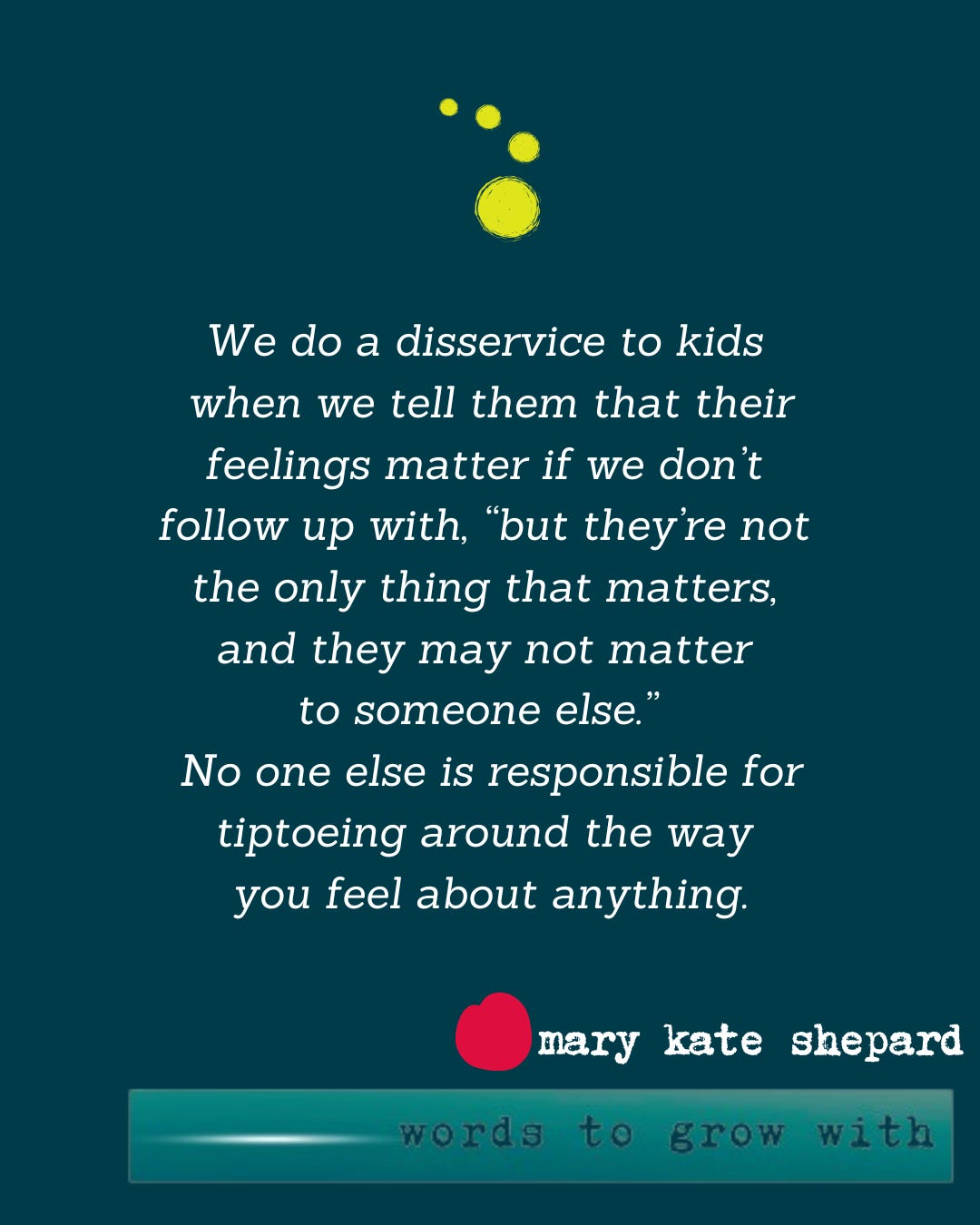
MK: When you consider your emotions in a given situation and name them, you can manage through them more effectively. However, emotions need to be treated as data, not as the source of our decision making. We do a disservice to kids when we tell them that their feelings matter if we don’t follow up with, “but they’re not the only thing that matters, and they may not matter to someone else.” No one else is responsible for tiptoeing around the way you feel about anything.
For example, if I feel nervous to attend a church get-together with people I don’t know well, I might say to myself in front of my kids, “I’m nervous. My stomach feels a little nauseous and I’m unsure of what to expect. I sort of feel like backing out.” I’ve now named the feeling and gathered the data of how it feels in my body. I might then say, “But I know if I’m nervous about something, it means it’s important to me. I’m going to make sure I get there a little early so I’m not overwhelmed by a ton of people when I walk in. Then I’m going to look for a familiar face and talk to them first.” This of course works for situations where you can have a little foresight. In other cases, sometimes you simply have to act and then work through the emotions afterwards.
For example, if we are in a parking lot and my 4 year old wiggles his hand out of mine and tries to run to the car, I’m just going to act. There’s no time to work through emotions. After I grab him and have a safe hold on him, take a few deep breaths, and am composed, I might say, “I realize I probably scared you when I yelled and grabbed you. I got scared because I love you so much and I would hate for you to get hurt. You may never run away from me in a parking lot. Next time I’m going to put you in the cart until you are ready to walk beside me safely.”
Talking about these feelings after the fact can help me and my child process what just happened, but they don’t change my ultimate behavior.
DANNI: I love how you tell your children that their emotions are not the only thing that matters. We are seeing more and more emotional instability in young children. I believe that with all the syndromes being diagnosed there is too little focus on the impact of unsuitable environments and activities. We are all learning to point blame instead of taking the time to understand what we are feeling, why we are feeling it, and how to take full responsiblity for our emotions and actions.
“But they don’t change my ultimate behavior.” Kendall Lamb speaks about ‘repair’ with her young daughter in her bHs. My daughters are now adulting age. Do you believe that we can continue repairing with older children, or at a certain point, is it up to them to find peace with ‘the damage’ caused?
MK: I don’t think it’s ever too late to repair, but I do think it’s important to manage expectations. If you are a parent of a grown or older child, repair is less about you and more about your child’s healing. Accepting that the onus was on you for your mistakes in parenting and that they may have caused damage is a noble act. But it’s important not to expect your child to instantly forgive, forget, and/or be willing to forge a relationship going forward. These things are built in time, but understand that as a parent, the pattern of negative behaviors caused a breakdown of trust. The way to truly repair that is through a pattern of proving yourself trustworthy as a compassionate, but authoritative figure if the child is still under your roof. And if the child is now grown, lean into the compassionate.
DANNI: Emphasizing this ‘trust takes time, patience, and compassion’. Urgency is a weak reaction, a sign of insecurity. Practicing self-love helps us as parents to move away from the need to control things, to feel at peace with our imperfect loving. Strong parenting is often about the sit, wait, and pray.
Mary Kate, in an essay, you wrote: Home is a little church. I love this. I am curious. What does forgiveness look like in your little church?
MK: Forgiveness is defined largely by our faith, so I would say that forgiveness is certainly sacred. On our end as parents, it is immediate. We want to model the importance of eager and unrelenting forgiveness because we realize it is the first step in reconnection. If you can’t forgive a perceived slight, even if the other is unrepentant, the relationship remains severed. And for us, it really is genuine because it’s not forced, it’s empathetic to their position as children who are learning, and it’s a true attempt to begin the repair process.
Now that is what we model. However, what we say to our kids when they are slighted is, “Even if you don’t feel like forgiving them right this second, you can say ‘thank you for saying you’re sorry’ and take some time to work through it.”
We also often tell our kids that “sorry” is an action verb in our house. When you say sorry, you had better at least intend to make a change in behavior. Our hope is that they begin to understand that offering forgiveness is an act of charity to themselves and to others, but this gift must be given freely and genuinely.
DANNI: Beautiful how you glue the “sorry” with radical responsibility to change. In an effort to protect our children in a world that feels overwhelming, many parents have a difficult time reinforcing personal responsiblity, responsive behavior. Again, I often reflect how kids are being weakened. In this case, by overprotection in some areas and being given too much freedom in others.
We spoke briefly about technology in part one of this conversation with Kyle. More specifically, what is your approach with AI and social media in the home - resist or embrace?
MK: Technology, AI, and social media are realities of our time. And I believe we were created for such a time as this. As such, we are the gatekeepers of what we allow in our homes. Technology is not inherently evil. It has its place but as with all things, it can also be easily corrupted.
We use technology in homeschooling often, but I heavily monitor it the whole time. Sometimes even in ads, AI content will come through and we talk about how we must be careful about what is real and what is AI generated. When we allow iPads, they are playing games that we have vetted. The kids FaceTime family members who live far away.
Social media isn’t something appropriate for our kids at this time: we really try to focus on cultivating in person social interaction with others through activities, church, and simply being part of our community.
Technology is changing as quickly as our children are growing, so it’s always going to be a dynamic conversation for us to reassess and respond prudently in a way that reflects our values.
DANNI: Dynamic conversation feels like a theme. More important than finding solutions (so often we will have to be okay without them) is being humble enough to ‘sit’ together with the questions. True communication is really hard, but extremely necessary. I was saying something like this to someone who was speaking about him and his wife having different ideas of vacation. She wants Club Med. He wants trekking in Laos. I believe that it is less important to ever arrive at a common idea of vacation than it is to communicate our authentic desires to one another, to be completely honest but in a compassionate way. They can even decide to take separate vacations and then plan something special as a couple. So much worse is trying to make someone else’s dream and beliefs yours while sacrificing your own. Plus, the real problems arise when real communication ends. Although I understand why (after work, school and after school schedules, meals and laundry, who has the time?), it seems incredible to me how many families never communicate. It is similar to my thoughts about people who never stretch their bodies - like, how can we possibly function? The most honest answer is that we don’t.
Speaking more about communication, Kyle’s background as a military resilience instructor and your background as a speech pathologist (focusing on communication and emotions) seem so different. How do you effectively combine the two?
MK: I think they are different, but complementary. Resilience focuses generally on adaptability, self-discipline, and management of emotions regardless of the circumstances. Having a good command of language and the inner dialogue you maintain can absolutely contribute to resilience. Additionally, the ability to pick up on someone’s social cues and communicate with them effectively can be a valuable skill for a resilient leader.
I love Dr. Becky Kennedy’s pilot analogy to illustrate how effective communication and resilience go hand in hand. Try to imagine you’re a passenger on a plane experiencing intense turbulence. The pilot comes over the speaker:
Pilot #1: “Don’t worry. There’s nothing wrong. That bumpiness is nothing.”
You might almost feel gaslit, thinking, “Why is he saying that’s nothing? That’s pretty extreme turbulence!” Kids who are raised by parents who parent in this way may doubt their own instincts and intuitions as they grow.
Pilot #2: “Um did you guys feel that? Uh. I think everything’s good? I mean. I don’t know, I’ve never experienced this level of bumpiness. It’s stressing me out!”
This would not only speak to the lack of confidence of the pilot, it’d be panic inducing! Similarly, when we parent from this place of constantly sharing our every inner thought and anxiety with our children, you can imagine the effect this would have on a child long term. A child may develop significant anxiety and difficulty functioning even with small decisions. Or, a child may feel the need to take over and “parent” the adult to provide some stability and compensate for their parents lack thereof.
Pilot #3: “Hi everyone. I know we’re experiencing a certain level of turbulence. We are passing through some weather at the moment, but should be moving through it very soon. My copilot and I have it under control. Please remain in your seats, and we will move through this for a comfortable remainder of the flight.”
The last pilot demonstrated empathy for his passengers, a composed demeanor, and explained as much as the passengers needed to put their minds at ease.
Kyle and I combine our skills in order to manage our own emotional state and then do the best we can to communicate with our children and be an example of sturdiness and resilience for them.
DANNI: I can imagine how intense those date nights Kyle spoke about can get. 😅 But seriously, how much time and care you put into working with one another for the benefit of all resonates with me so much.
Parenting is the hardest job in the world and we do not even get paid. Tell me why this statement is false.
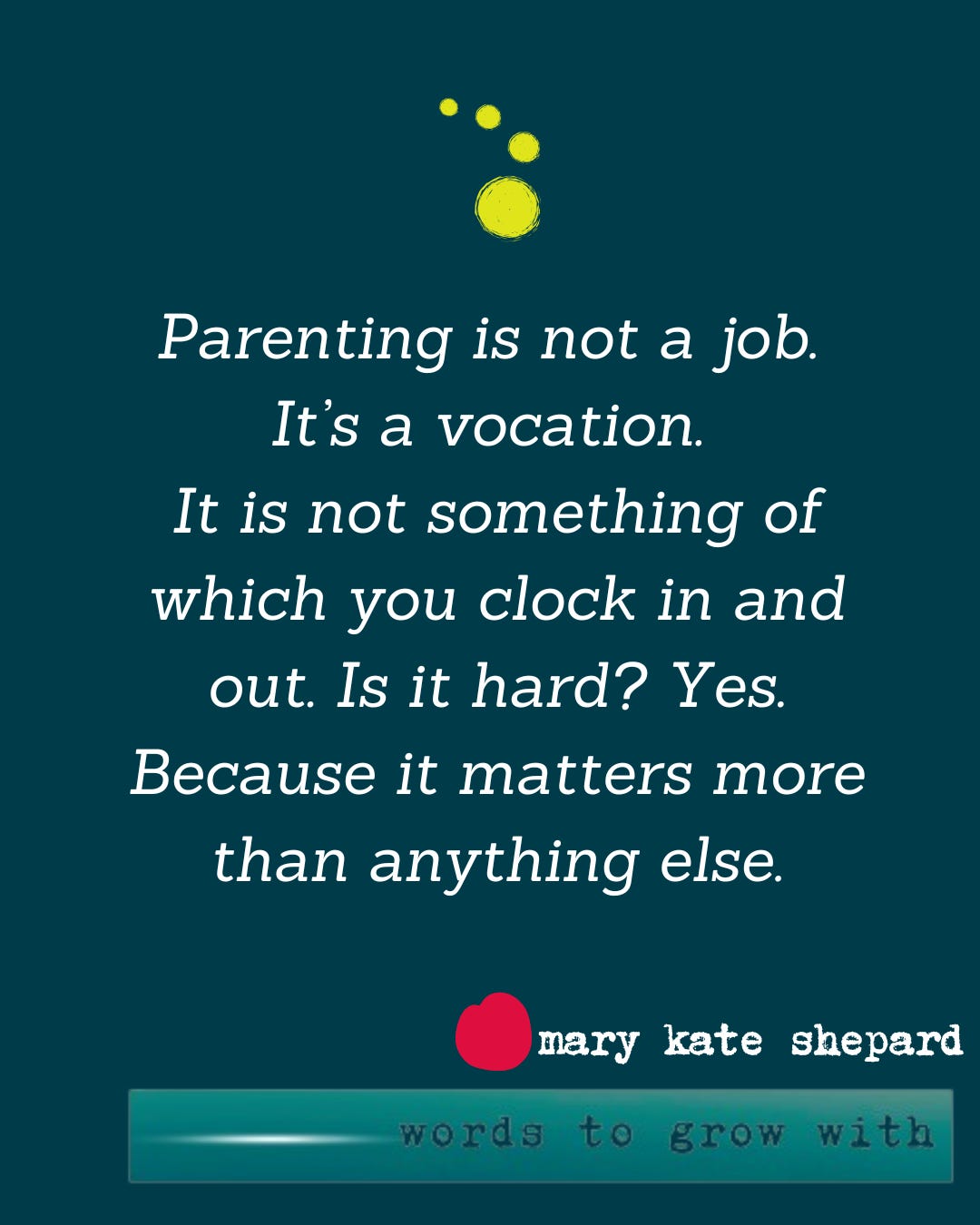
MK: Parenting is not a job. It’s a vocation. It is not something of which you clock in and out. Is it hard? Yes. Because it matters more than anything else. But I am very averse to the current trend in society and social media that purports parenthood as miserable or something that needs to be suffered through.
Viewing parenting as a vocation rather than a job is key. This isn’t something to be entered lightly. It gives you the ultimate form of fulfillment we can gain in this life. And if you do it right, it provides a legacy to serve the greater good.
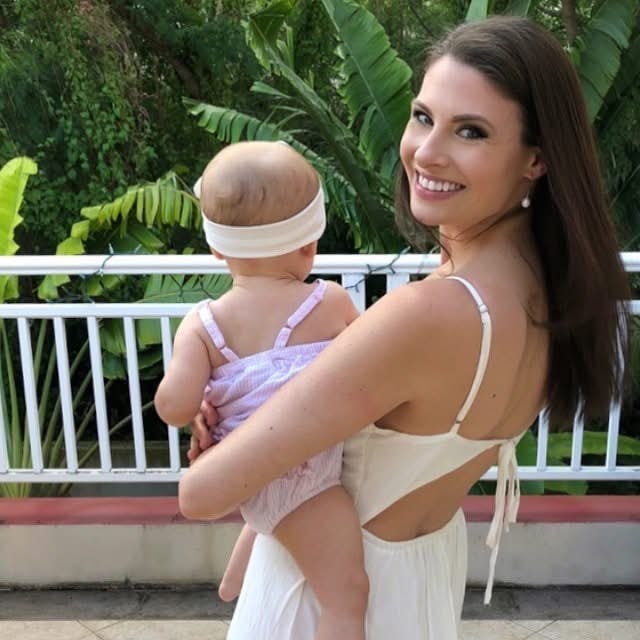
Do I get paid? Yes. I get the sticky little hands cupping my face and looking into my eyes and a slobbery open mouth kiss from my 10-month old. I get a snuggle from my 4-year old who asks to sleep in my bed every night because he feels home when he’s next to me. I get a 6-year old who insists on both a kiss AND a round the neck hug before bed. I get an 8-year old who tells me she used to look down at me from Heaven and chose me to be her mommy. I get immediate grace and forgiveness when I make mistakes. My wages are way, way more than I deserve.
DANNI: Yes to all of this. I often refer to the sacred sacrifices of family. As I said with Kyle, sacrifice is an important word, in our home and not only. Being loving is a source of personal joy, not an obbligation. I like to think that we get the same kind of payment for being deeply, lovingly human. This is why I do my best to apply the same type of motherly love to the world as I do with my children. The payment is this priceless sense of connection and purpose. There is extra value in showing our children that we can offer this type of love to all life. It teaches them a broader idea of protection and care. The world needs this.
Share a time when one or more of your kids became ‘the teacher’.
MK: My kids constantly humble me. Just the other day during school time, everyone was a little “off.” Despite multiple redirections, their focus just wasn’t there. Between balancing the baby, trying to keep my 4-year old occupied, teaching kids that just weren’t receptive, and running on minimal sleep (again, thanks to the baby), I looked at the kids and said, “You know what guys? I’m done today. We can work on Friday. If your focus isn’t there today, we’ll cut our weekend short and finish up then.” Immediately my son fell into cries of regret and promised to work. My daughter calmly took deep breaths and said, “Sam if you want to work, I can teach you.” She then proceeded to gently teach him several ways to make 10. He focused and smiled satisfactorily as she encouraged his efforts.
My daughter is often a mirror for me, quietly stepping in with maternal affection and instincts when I need to tap out and calm myself. This isn’t her responsibility, of course. And I explained that to her when I had calmed down. But watching this interaction humbled me deeply and reminded me of something. We all choose our attitudes. If my daughter can go from unfocused and unmotivated to suddenly jumping to enthusiastically teach her brother, then I, too, can recover and then do the hard thing of repairing and getting back to teaching well regardless of my feelings. My kids teach me way more than I teach them. I’m deeply blessed to have four very different souls from whom I learn.
DANNI: The traditional/moral values of the family in the West are collapsing. Family is coming to an end. Any thoughts?
MK: I would tend to agree with that. I believe the family is the absolute center of society and it has certainly been degraded over time. Basic decency, respect, humility, and integrity seem like relics of the past. Progress is natural and important, but gone unchecked, it can devolve into a resistance, or even abhorrence of traditionally held values. I think that’s what we’re seeing now: and I believe as of late, society is seeing that the fruit of that attitude is rotten.
I think that’s why you see so many millennials and some subsets of Gen Z digging up antiquated pastimes and grasping for nostalgia. I think that’s why you see so many young adults looking for a plot of land to build a simpler life with more self-reliance and a longing for small, tight-knit communities. And I think this is a totally natural humanistic desire.
I don’t think we were built for 24 hour news cycles and sensationalism or political tweets blasted to the world the moment they are typed out. I think we were built to worry less about the world’s problems that we can’t possibly solve and more about those in our communities for whom we can actually make a difference.
DANNI: This is beautiful, hopeful. And what would you say to someone who says we shouldn’t bring more children into a world like ours?
MK: I believe anyone who says, “You shouldn’t bring children into this current world” is unfortunately a victim to the attack on the family and yet another reflection of our current societal state. Having babies, raising them to love God, one another, and their neighbors is the way to ensure the future. Anyone who has stayed up all night with a fussy newborn, agonized over a child with a high fever, battled the decision of daycare vs. quitting their job to stay home, or prayed that their newly licensed 16 year old child makes it home safely at the end of the night is putting in real work.
Parents not only hope for a good future for our world, but actually devote themselves to raising those who will run it.
DANNI: MK, thank you for your wisdom and love. My 21yo, Kenia, has always wanted to be a mom, have lots of kids. She grew up with parents who have been extremely honest about the condition of the world. When Kenia began doubting her dream, a dear friend of ours (a very wise 76 yo naturopath) told her that she was the only hope for the future. If women like her with strong core values no longer became mothers, all the possibility for good in the world would vanish. And that would be a darn shame.
DANNI: What makes a great parent?
MK: I think a great parent maintains the tension between sturdiness and affection. I have been mulling over this for some time. I revere single parents who do that well because they have the responsibility of holding both of those qualities, and I can imagine not being able to share that is immensely draining. Because I’m able to share that tension with someone who values that balance as much as I do, I see how beneficial it is to bounce off of each other and share the weight.
DANNI: How do you hope to be remembered by your children?
MK: I hope they see me as a model of faith, a loving wife, and a devoted mother. I want them to see me as someone who wasn’t always perfect, but someone who consistently grew past my mistakes and weaknesses with concerted effort. And I want them to remember me as delighting in them for exactly who they are.
DANNI: Is there anything else about anything that you want to add?
MK: I just feel very honored and humbled that you approached us with this project, Danni. We love our family deeply and this opportunity has given us a fun opportunity to connect and really dig into our values on a deeper level.
Loving your spouse and loving your children well may seem like a small mark on this world, but I assure you, it’s quite the opposite. If the legacy you leave behind is well-loved humans, in a world so deeply in need of love, how absolutely glorious is that?
DANNI: Absolutely, positively glorious! May everything you so generously shared be an inspiration for all of us to focus on cultivating core values in our homes and returning to the importance of family for our own well-being and for the health of the world.

If you enjoyed this conversation, please subscribe to Kyle & Mary Kate’s Substack, Resilient Mental State.
Let’s keep the conversation going. I can never say this enough - your voice is fundamental here.
You grow with us. We grow with you. xo Danni
A few favorites for further reading with Mary Kate
Legacy, Love & the Long Vision of Parenting, an interview with Mary Kate Shepard by Erin Miller1
ed #14: Core Power: From Home to Humanity (part one)
·
“Those who avoid challenge become the most challenged." - Kyle Shepard

Bare HEARTS because we are so exhausted of holding up the pretty presentation. It is like we are all waiting for someone to come and tell us that it is okay to get super transparent and just be. This is the place. This is our okay. Thank you for joining us. 🙏💝
*this series was inspired by Jane Ratcliffe.
Read Erin Miller’s Bare Hearts here
This second part of your interview with Kyle and MK was as wonderful and inspirational as the first. Excellent questions to give us things to think about whether we are giving our best for our families. I have always believed that every member of the family should be encouraged to work as a team to help ensure the happiest, most loving, caring family unit possible. I think Kyle and MK do a fantastic job of emulating this.
Loved the part about Mary Kate's thoughts on schools. As a former teacher, I can't tell you how much respect I have for you, Danni, for amplifying her voice on this. When the media covers schools, it's usually to amplify the voices of principals or state superintendents of education or some other high-ranking official. Or when they feature teachers or former teachers, it's a quick Hallmark moment. 🙄
Brava!