


“So we ask ourselves: What story do we want to live? What is the right way to be? Sometimes, we must swim to the side and find new estuaries and creeks. Sometimes, the best way is to bushwhack a trail that’s never existed.” - Summer Koester
Hi all and welcome to Bare HEARTS, our monthly appointment to hold space for honest conversation & love as we grow with one another.
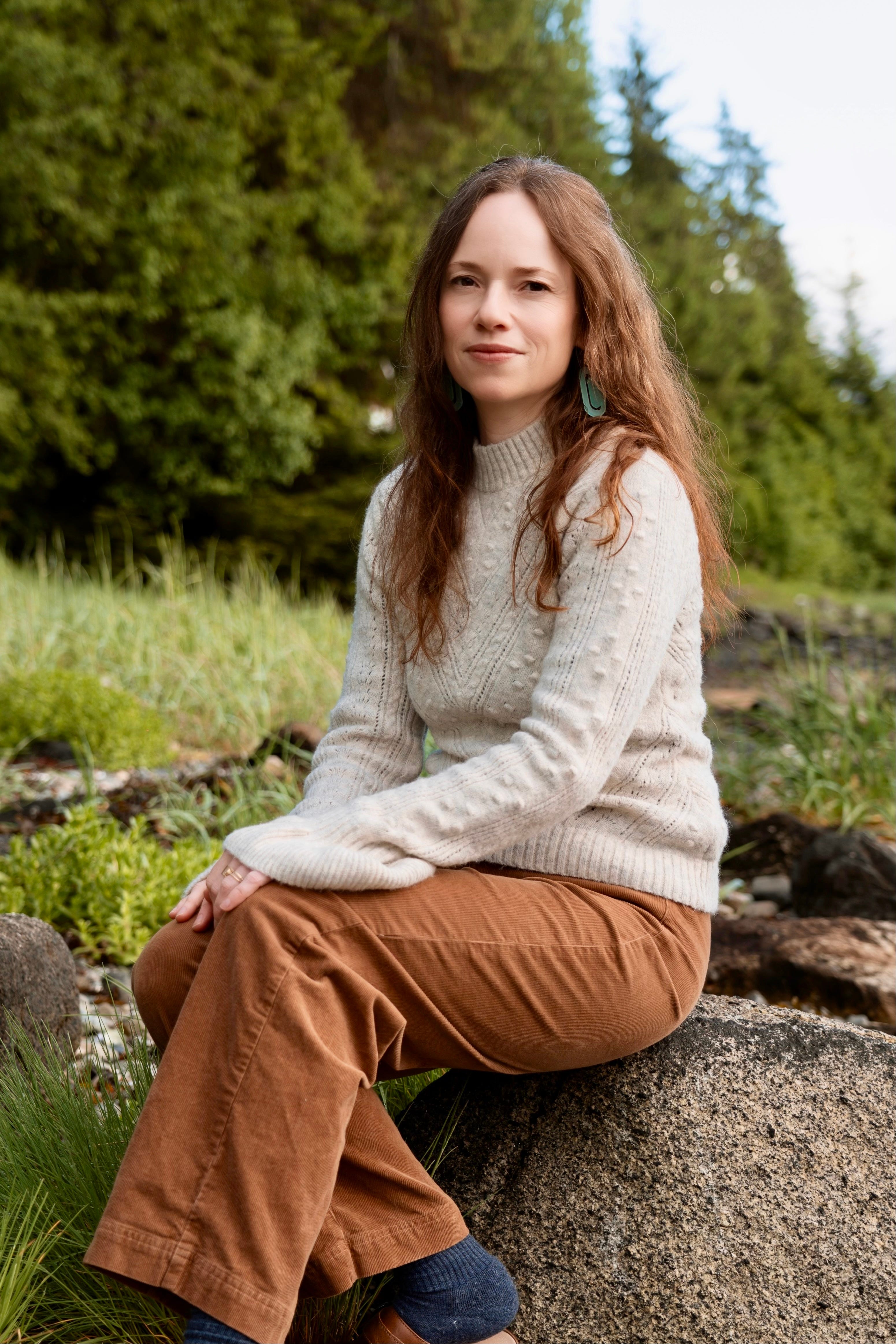
Summer Koester is impressive. Award-winning writer, poet, performer, activist, anthropologist… she dances, she sings, she plays the guitar, she teaches Spanish. She is a mom. Summer’s work has been featured in the New York Times, McSweeney’s, Slate, Electric Lit, Insider, HuffPost, Independent, and The Sun. Some of her topics include culture, gender, parenting, neurodivergence, and pursuing a creative life at the intersection of capitalism.
Summer is not afraid to dig in dangerous areas. She created her Substack publication, The Feral Stack, to examine Anglo-American culture deeply, beyond the vapid, connecting behaviors and values that no longer serve us and offering new ones that do. Summer says that when you subscribe, you become part of an inspiring, kind, and engaged community of cultural misfits, where weird is rebellious and revolutionary. Her work feels incredibly freeing if you are open to see the world from outside of the cage you were lured into.
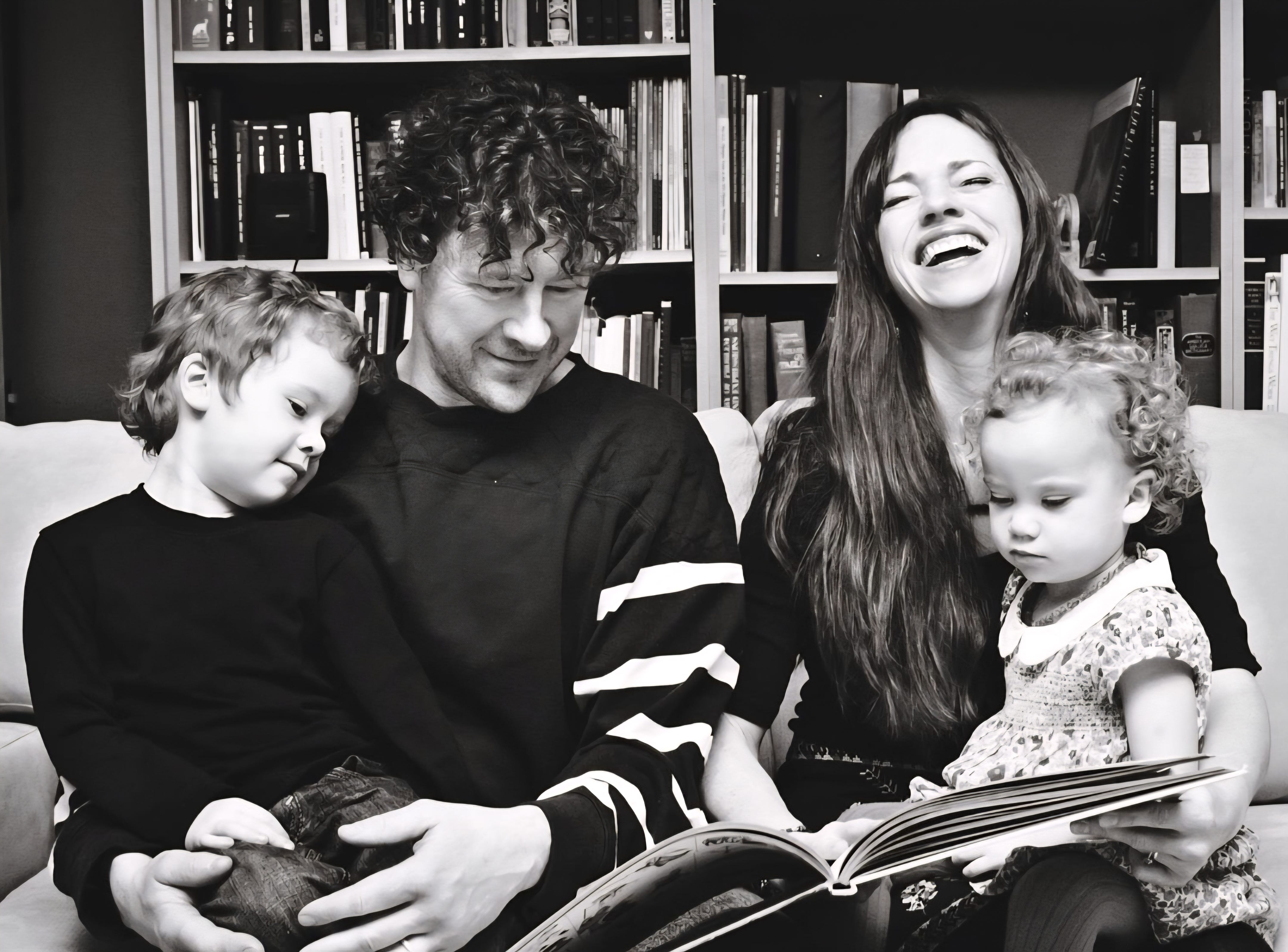
Summer grew up in the Alaskan wilderness. She lives in Lingit Aani, Juneau, Alaska with her husband, and her three kids: a fey artist, a trickster tween, and a mini Bernedoodle.
What I love about Summer
I love Summer because she is interesting, sharp, and thought-provoking. As a culture, we hunger for this. She is all about disrupting the social consensus, and she does it in a wise and witty way that makes us want to pause and linger on the questions we most need to ask… questions that we can only arrive at during a long pause. Summer challenges us.
I love Summer’s curiosity, how she knits together pieces of life that too few are able to get a grasp of. She educates. She makes us feel courageous enough to want to change, I mean really change. And with this, she is a powerful source of hope.
I love that she is a mom and I love everything she shares about this part of her life.
And as I wrote to her, I adore her name (one of my favorites) and I love how, with even this simple exchange, she made me think differently: “Personally, I wouldn’t name my kid after any thing. I didn’t love how my name kinda put me in a box. I wanted to be Winter, or Autumn, or Dark. Not always cheery sunny Summer!” I love that she uses the image of a box because much of my adult life has been all about finding a way out of all the boxes I was told I needed to get comfortable with.
Honest, funny, poetic, reflective… and so much more. Let's get to know her better. Here is…

What is something that you experienced as negative in your childhood that you now acknowledge as being a portal for building integrity and inner strength?
Growing up in Alaska, I felt like an alien. I saw how other kids could trust their bodies in ways I couldn’t. Also, humans made little sense to me. I thought maybe I was sent to earth to observe humanity and report back to the aliens. I felt more connected to nature, spirits, and the performing arts than people because they let me disconnect from my fragile body and humanity.
But eventually, this feeling of being an alien became my superpower. My sensitivities and disembodiment allowed me to hear and feel music in ways others couldn’t, to lose all feeling of self-consciousness. To express myself without fear.
Even now, I can pluck a harmony from the air. I was a pretty good dancer. I can cry on stage. I have a strong intuitive sense that allowed me to travel and live alone in Latin America at a young age and to shapeshift. Studying humans and learning how to become other people on stage for years helped, so adapting and transforming came naturally.
(How tender - I imagine little Summer dreaming of being stronger and creating sacred spaces to feel this. And what you perceived as the weakest part of you transformed into so many life enriching qualities and talents - a heightened experience of things. Jennifer Pastiloff says something about this - how her deafness is a catalyst for developing a “hyper-observaton” of the world. That while it is exhausting, not hearing made her an excellent listener. Beautiful, your ability to find power from what most would experience as a reason to withdraw even more.)
What aspect of yourself took you a long time to accept? Did anything or anyone influence this act of self-love?
When you grow up with some insecure attachment, as most Gen-Xers did, you worry that you aren’t enough. You believe you need to change to please others so you won’t be abandoned. Much of my childhood was spent trying to please others and earn their validation.
Becoming who others wanted me to be, I didn’t really know who I was. I didn’t have a strong sense of self. But I would say that living in a marriage for eight years with a psychologically abusive, narcissistic husband, and finally finding my way out of that, helped me learn to finally choose myself—and figure out who that was.
It was also very gratifying when I met my current husband, who fell in love with me despite my body constantly breaking. He is an old-school Alaskan fisherman-snowboarder-water worker with a very strong, capable body, unlike mine. And he loves me, despite that, as he puts it, I’m like a vintage Corvette: “Good lines, but always in the shop.”
(Learning how to not repeat a pattern is such an incredible act of self-love. So many choose the same situation over and over again. But you chose someone for yourself who knows how to honor all of you and offer the care your uniqueness deserves. I love to think that you regularly thank yourself for this.)
You refer to your body as fragile. Briefly explain, for those who don't know your story, what you mean by this.
Poetically speaking, health issues were written into my stars when the astrologist told my mom her baby girl would suffer from health problems--but nothing terminal. I spent a week in an oxygen tent when little and have been in and out of the ER for aggravated asthma since. I was born with extra ribs in my neck that cause chronic neck pain and numb pinkies. I threw my back out when I was 18 during a snowboard accident and was told I needed surgery, but I manage it with yoga. I had to stop yoga because of migraines. I've had a million root canals and foot infections. Also, allergies: when I was tested for 13 naturally occuring allergies, I tested allergic to all 13.
(I am thinking of how all of this ‘offered you’ a fastpass into your spiritual, self-accepting journey. With all your accomplishments, you’ve embraced the stars you were handed, dreamt with them, and became your own guiding light. You decided not to answer the first question these Q&As often begin with: Who was your childhood hero? Maybe this is because you were your own hero. I believe you were.)
In general, have you labeled yourself ‘sick’ or rather someone who was been handed challenges to grow from like everyone else?
I don't think of myself as sick, just hypersensitive. Perhaps a bit too porous and full of holes for this world. EVERYTHING gets in. It's a curse but also a superpower. My body is always sending me messages. I'm not always sure what it's trying to say, but I believe it's trying to protect me -- emotionally, physically, spiritually. I could go on and one with examples of how.
(Summer, this is incredibly inspiring. Justyna Teresa Cyrankiewicz spoke about hypersensitivity, how this used to make her feel like something was wrong with her.1 This is something us Bare HEARTers commonly feel - the ‘lack of culture’ being created is not suitable territory for our wholeness. We feel like we have holes. But the holes are in the system. We are like organic fruit and veggies. Organic should be normal, but someone made us believe that toxicity is normal and organic should ‘cost’ us more. This is ‘counter-human, insane’ thinking. The world needs us to keep finding ways to use our hypersensitivy as a superpower.)
What has been the hugest challenge of finding authenticity?
Showing up authentically has never really felt safe. I don’t love binaries, but it seems that life presents two choices: be true to yourself, or be who others want you to be. Risk losing others, or risk losing yourself. I chose the second option for much of my life. I shapeshifted and people-pleased into what others wanted, and it cost me. My body kept the score - health issues I’m still untangling, years later.
I’d rather risk losing others than losing myself again. Being true to ourselves requires courage. Courage comes from the Latin word for heart. So every time we choose honesty over approval, we’re doing something that is, at its core, an act of love.
(Choosing honesty every time. 🫶)
When you are feeling overwhelmed, what do you do to recharge?
I light my flameless candles, I sit in the bath with my zen music, and I sweat and I sweat and I sweat. I do that every single night.
What is your go-to mantra?
To slow down and breathe.
(This is an every moment one for me.)
What part of your life needs the most love right now?
My children, which is why I have once again chosen others over myself.
And yes, I know about putting on your own oxygen mask first. I saw an Instagram post that was like “Being selfish is good for your kids” and “You’re hurting your kids when you wear stained sweats all the time.” I ain’t gonna lie, I felt personally attacked by that. Like, maybe I want to wear the stained sweats, okay? Except the sweats are fleece and they’re covered in dog hair, but whatever. I choose to be invisible. Let me claim my crone era. I spent enough of my life being pretty for others. If I want to be pretty for me, cool—but otherwise, let me wear the sweats, mkay?
But having said that, it hurts that I’m once again placing the needs of others over my own. I’m giving my kids the love and attention that they need, even though it means sacrificing my sense of self. I no longer participate in the literary community, dropped out of my annual holiday bazaar show, don’t go to dance classes or walk with friends. I definitely don’t sing or act in plays anymore—just because my kids need me.
I wish I could bring my kids and have them participate in some of that with me, but those things are too much for their sensitive, neurodivergent selves. I mean, my daughter hates music and food. Those things feel violent to her (she’s autistic), and she gets really upset. We’ve tried headphones. They don’t work.
Honestly, the only thing I do for myself now is write because it’s something I can do at home with my children. And that to me is sad, and gives me a lot of grief. But it also makes me happy that I can be there for my kids and help them, and hopefully bring more softness and love into their lives when they need it most.
(Summer, I love your love, your hurt. I also put my (very intense) family first; it is a very conscious choice. My husband and I made life choices so that we would have the ‘privilege’ of being here for our girls. People judge this. ‘You could have been so much more,’ as my mom says. How did caring for our children become ‘less than’, and not the most important thing there is? Author Kelly Corrigan says that we cannot all be glitter; someone has to be the glue. And at the same time, I remind us to take those ‘only me’ moments - 5 minutes of dancing in the bedroom alone can sparkle up the soul. I suppose you know this - you ‘sweat and sweat and sweat’. It also helps to make a small shift in perspective. Instead of dividing my time into my time and then… time for my husband, time for my kids, time for my mom, I try to think of all this time as my time too. For example, if my daughter is in crisis and needs to rant, I ask myself: what joy can I find while spending this time with her, even if I really needed to take a walk or wanted to write? If nothing else, there is the joy of our sacrifice and service: offering love and compassion is sacred. When we look back at our life, we will crack-up about the stained sweatpants and never, ever regret the time given to the ones we love. We are also teaching our kids a core value: taking care of one another matters.)
You write about difficult, tender stuff, but you are also funny. Speak about humor.
Thank you! It’s probably hard to tell from my very unfunny answers, but I discovered humor during the pandemic. At that time, I lost a job, I lost my eyesight (developed early onset cataracts), I was afraid that Covid was going to kill me because of my fragile lungs, my children had no social bubble. I was isolated and depressed. I had to teach Spanish over Zoom to middle schoolers while simultaneously trying to figure out how to homeschool my kids. I didn’t know my daughter was autistic at the time, so I had zero resources to help her. My husband was an essential worker so he was gone all day and working long hours.
Humor saved me. I learned how to write satire. I wrote about 100 satirical pieces in one year, and most of them were published, including at places like McSweeney’s. Suddenly, I developed a comedic voice.
If you look at comedians, you’ll see many of them struggle with depression. They found their way to comedy because that was their lifeline. At least, that was the case for me. Every time I wanted to sob, all the times I couldn’t sleep from worry, I’d stay up until three in the morning hammering out revisions to satire pieces. The best way into hard material, Emily Dickinson said, is to write it slant.
Your definition of ‘normal’ is...
Normal would be my daughter not screaming when we eat dinner together or play music. It would be sleepovers and birthday parties, sending your kid to school while you work, getting more than ten hours away from your children in 14 years. Yeah, that’s not our family.
Our daily normal is what Glennon Doyle calls “brutiful”—brutal and beautiful, like Alaskan weather.
(I was speaking to my 21yo about her difficulty of growing up in this atypical family. She can finally see that it is never all bad or all good, but understanding this does not take away the challenge, the wounds. I don’t believe it is supposed to because our responsibility is to do something with them. Van Gogh said: “Normality is a paved road. It’s comfortable to walk, but no flowers grow on it.” Going back to your first answers, I believe there is an extraordinary theme here: You’re growing flowers in brutiful terrain.)
Love how beautifullly raw this is: “Oh, darling, sometimes I wonder if you are too human for this world / you feel too much, heart open and laid bare like the low tide or an apocalypse. / How will you survive this world of machines? / Is it no wonder I lay awake worrying?” You write so freely about your daughter’s autism. Talk to us - whatever you feel like sharing.
There’s a part of me that only wants to silver-line the whole experience, because it’s the only way to get through it. Because the honest truth is, it’s so hard. Just a few nights ago, I couldn’t get through a story during dinner because it made my daughter cry. Right before that, she kept turning my music off because anything with lyrics bothers her. Cue the meltdown, and now everyone has lost their appetite.
I’m with her all the time because I homeschool her, because our governor has gutted education, and she wasn’t getting the support she needed at school. We live far away from everything, too.
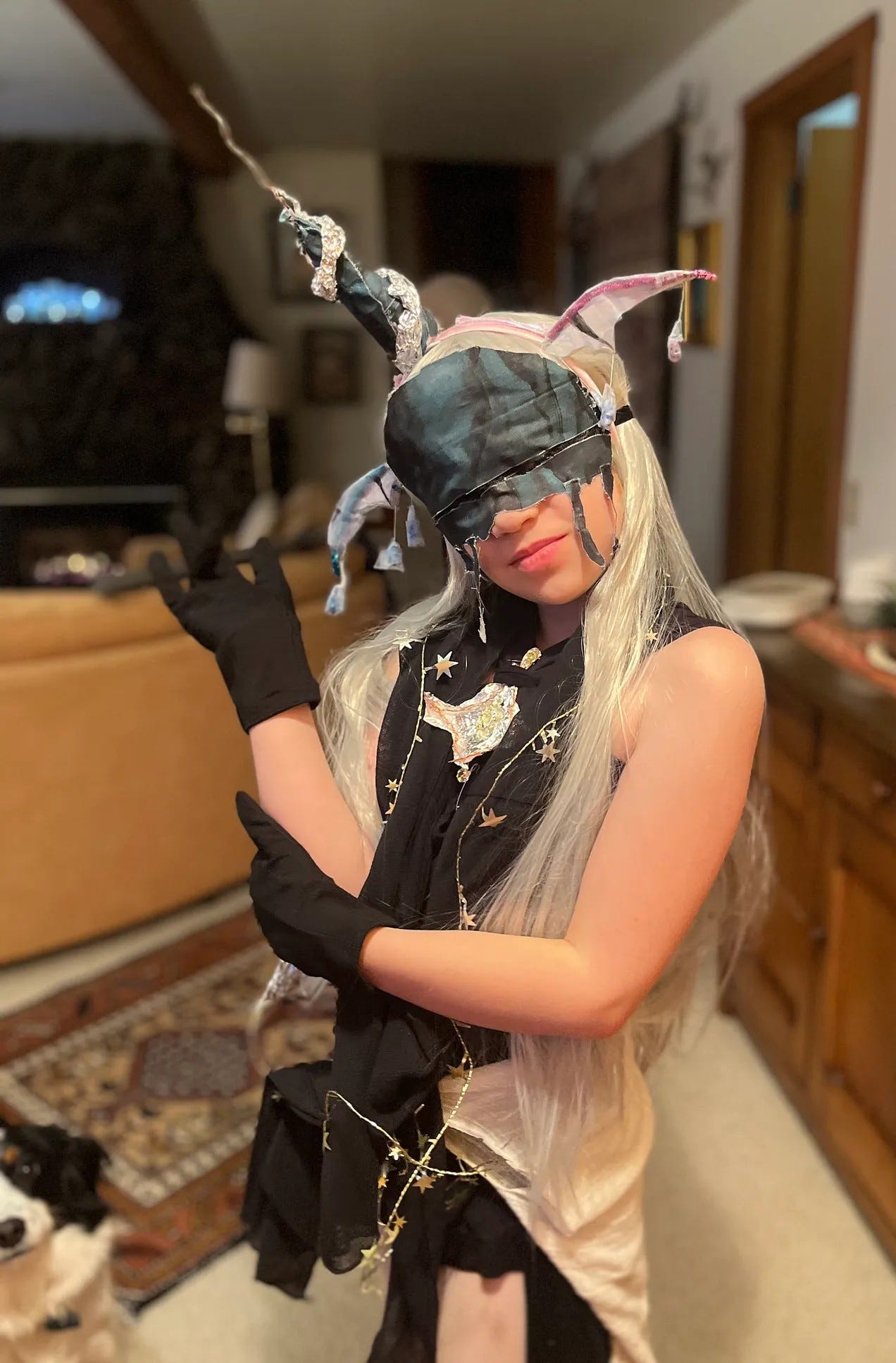
So I silver-line it. I look for meaning, messages, and wisdom, trying to make sense of it all. For example, her amazing creativity is inspiring. Her powerful voice; she knows exactly what she wants and asks for it. The costume she designed and created for Halloween. Her confidence to show up authentically. She teaches me how to show up authentically, be assertive, speak up for myself, and set boundaries.
Also, her empathy and need for justice are very strong. Her insistence on truth. What kind of world could we co-create if we all felt each other’s pain? If we were all so honest?
(Autism - it's one of those things that you cannot know without really knowing it. My 18 yo daughter said it well while we were watching the series, ‘Parenthood’ together (there is a boy with Asperger syndrome): “That is so challenging. I think the secret is to flow with their special qualities instead of against them.” This made me think once again of how we can use challenges to ‘grow flowers’ and how this would benefit all parents. Because really, your words could be the words of any parent who is attune to the reality of things today. In this ‘brutiful’ world - the brutal feeling often so overwhelming - most kids have some level of special needs; and all of us, ‘how will we survive this world of machines?’ Being too human is not a thing in a healthy world. Maybe ‘the problem’ is that your daughter is too extraordinary for this world, and for this reason, the qualities she possesses is exactly what this world needs most?)
In her Q&A, Amy Brown2 shared the positive side of caring for her mom with Alzheimer’s. What’s been beautiful about caring for your children's uniqueness?
Oh my gosh, so much! the sense of purpose you get when you become a parent. Mothering has literally filled the void that I spent so much of my life trying to fill with external validation, food, alcohol, toxic relationships, etc. I have no desire to drink or smoke now -- but no judgment for those who do. I don’t binge food or purge on exercise like I used to. I thank the acute purpose parenthood has given me for that.
Most importantly, mothering has given me an opportunity to heal my inner child. School was sort of traumatizing, so I’m able to give my daughter a different experience by homeschooling her and building a curriculum around her needs and strengths. My mom was so wonderful, but she was really busy. I’m able to be there for my kids in a way my mom probably wanted to be, but couldn’t. I’m teaching my kids how to embrace their weird and work with their energy rather than against it, which so often runs counter to what school and society teaches. I’m out there supporting my daughter with making friends and navigating relationships when I see her feeling excluded or lonely. In a way, we’re doing the work together. We’re both learning and growing.
(And isn’t this what parenthood is - finding the answers as we go, healing ourselves, not making this an obstacle, being the best example we can be.3 And, with humility, we learn how to feel capable - stay curious, not beat up on ourselves (love ourselves!), and forever grow with.)
Are you at a point in your life that you are able to say, I love all of me no matter what?
I wish I could say I’m at that point, but I don’t love how my body continues to disappoint me, or how my children have inherited some of my health issues. I don’t love how I second-guess every interaction with people. How my sensitivity often feels too overwhelming for the brutality of this world. I don’t love how I self-isolate because of that. I’ve reached the point where I’ve stopped performing and I've stopped pretending. But then I second-guess myself. It’s an endless loop.
Now more than ever, I feel like I’m back in middle school. I understand this is a common occurrence for many women going through perimenopause. We’re going through another major life transition, so it’s like middle school all over again. We’re trying to understand how we got here. And that requires digging deep into our unresolved wounds.
I don’t love that I’m still trying to figure out what is wrong with me, or that my children have inherited some of my social awkwardness and insecurities. I’m not trying to be pessimistic. I just think we need to be honest before we can hope, and our culture tends to always search for the silver lining when perhaps we just need to name things for what they are. The hope is in the truth-telling, in my opinion.
(I see an abundance of self-love in this answer. You’re standing in the middle of the auditorium naked holding up a sign that says, ‘This is me!’ Returning to doubt is human; we need questioning to grow. Can we see it as this - questioning - and transform the doubt into judgmental-free observation? Also, self-love asks us to drop the ‘I wish I could say that I am at that point’. There is no wishing anything other than where ‘I Am’. This is the starting point, trusting that the Love we deserve lies here.)
You can master one ‘core value’ to support your well-being. Which one would it be?
Love your weirdness. It’s your superpower. Humans are ridiculous. They will jump off a cliff if their friends do. Don’t be a follower. You do you. But also, if you have to mask for safety or whatever, then go ahead and mask. Just know when you’re doing it and why. And always remember to take it off.
You wrote that ‘stepping outside’ of white America when you were in your adulting phase taught you about other cultures. What is something you noticed?
In the U.S., we ask “What do you do?” In Latin America, we ask, “What can you tell me?” In the U.S., time is rigid and there’s never enough of it. In Latin America, time is fluid. Relationship is valued over productivity. “Today for you, tomorrow for me,” is the saying.
(We are in abusive relationships with our labels/status. We are constantly under pressure to create appearances; our labels are then in competition with everyone else's. The hugest problem (not only in the US) is division. What would happen if we replaced, what do you do? with what are you doing right now that is creating love and unity?)
You live in the home of the Tlingit (how beautiful this sounds) and were mentored by Native Alaskan elders. What wisdom do you return to on any ordinary day?
We are all connected. We respect ourselves, each other, and the environment. We only take what we need. We share with others. We observe the lessons of the rainforest: collectivism, interconnectedness, reciprocity. We recognize that diversity is a strength.
(🙌🫶🙏)
You question culture in a way that many refer to as extreme or crazy. Do you ever wish that you were like ‘everyone’ else, maybe thinking that life would be easier - a sort of ignorance is bliss kind of thing?
Is it extreme/crazy? Is that why I don’t get invited to dinner parties among polite company anymore? Lol. Sometimes—okay, often—I wish I were “normal.” I wouldn’t need to write if I were. Truthfully, I’d give up writing if I could just be normal—if that meant having community, friends, a village for my kids. Being independent is easy when you’re young, but as a parent, you need people.
But at the same time, the writing helps me understand myself and the world. Helps me make sense of it all. When I was young and lost, I had an eating disorder, and I didn’t even know why. Now I can be like “This is what’s happening.” Once you can name something, you can work with it. That is power.
I’m a fighter in that I’m fighting against the swift current of culture, doing things you’re not supposed to do, fitting into spaces the wrong way. I’m fighting for cultural change through my words. Fighters get hurt, and I pay the price for speaking up.
But at the end of the day, I’m trying to create cultural change that benefits everyone. I’m showing up in integrity. I’m modeling that for my kids. Healing is, and always will be, collective.
(Being different is damn difficult. We are swimming against the world, trying not to drown in judgment and misunderstanding, disappointment and frustration. We understand that what most live as normal is not normal at all. (Btw, my dear friend Sage Justice4, recently invited me to switch ‘normal’ with ‘typical’ and it does feel better.) When you know this, there is no going back. We have to find different kinds of dinner parties to prevent the loneliness. I am thinking of the words of writer, soulxsigh: “Being different was never your problem it was your purpose.” We know this is the only way we can make the slightest difference.)
Your words are so powerful. This is just an example: “Perhaps the real battle is not us v. them, but the battle for our own humanity. Who are the humans, and who are the bots? We are waging spiritual warfare within ourselves.” What do you trust most right now?
Our patriarchal religions teach us that God and wisdom live outside us, far away. I like surrendering to the cosmos, but I also believe we hold divinity within ourselves. If we can be still, rest, and dream, we can find our truth and heal ourselves. And once we heal ourselves, we can heal humanity.
I read recently that “our pain is part of God’s redemptive suffering.” Our suffering connects us to the collective work of healing. Pain plunges wells inside us, allowing us to go deeper—to meet ourselves and each other in that depth. Pain becomes a doorway to wisdom and compassion. But only if we feel it. Only if we “sit in the shit,” as I call it. Denying suffering, refusing to move through it—that’s what turns people into bots, what stunts our spiritual growth.
That’s what I love about writing. True, maybe I should be out touching grass with my kids. But writing is the best therapy I’ve ever met—and maybe the truest way I know how to touch the world. All my life, I’ve been trying to figure out humans. I do that with writing. But this time, I’m rewriting myself into humanity.
(Trusting the pain - love this! Recently my daughter had a huge breakdown (about us not being like everyone else). She asked me why I was smiling. And I said, “Honey, this is a great thing, an amazing day. If you never pooped you would feel awful, right?” “What does that have to do with anything?” she said rolling her eyes. And me: “You are letting all the shit out, and what a relief that you are. This is not a breakdown, it is a break-through. One day you will get how this pain is making you fully human!”)
What scares you most about this world? What advice would you offer your children about this?
So many things scare me that listing them all would be too depressing and time-consuming. My kids are at the age now that any advice I give them, they’re going to do the opposite. For example, my son just wants to earn a shit ton of money and thinks that’s the answer to happiness. I think he sees me as working less than other moms, and he wants me to be normal so he can feel more normal. So the best thing I can do right now is to give him love and attention, and a sense of humor. According to his friends, my son’s hilarious. That makes me happy, because he’s going to need that.
(Oh, Summer, this relentless desire for normal. My daughters and I are so close, and they also express hurt and anger at times. One day they will fully see the value of all the invisible work… that with all my mistakes, I was always devoted to creating loving ground, especially when we lived in small, atypical spaces and on the road. They’ll understand that the choices are so difficult, that we were (are) just humans embracing the biggest responsibility ever.)
What or who will you never stop fighting for?
My kids. My voice. The voiceless. The powerless. The underdogs of the world. Change for the better. My autonomy. Equality. Fairness. Truth.
When you give yourself permission to free yourself from the boxes, who is Summer Koester in 3 words? - no titles, no labels.
I’m going to steal a line from Sophie Strand: “I’m so lucky.”
(I feel your joy - with everything else, in the end - Blessed with a great, big, beautiful B!)
Is there anything else about anything that you want to bare with us?
I want to thank you, Danni, for offering up this beautiful space. Being asked to reflect like this is its own kind of medicine. And one last thing I want to share: if you’ve ever thought about excavating yourself through writing or art but haven’t quite started: do it.
Once I started writing my memoir six years ago -- goddess help us, it’s currently seeking representation, pray for me! -- my health problems mostly went away. Sure, I still have neck and back issues from hunching over my computer too much, but getting the feelings out of my body and onto my google docs has genuinely healed me. So just write it, speak it, draw it, sing it, dance it. Then come find me at the Feral Stack and tell me all about it.
(Amen. And thank you!)

If you enjoyed this interview, please subscribe to Summer’s Substack, The Feral Stack. Now…
keep the conversation going prompt
It feels as if life the system is trying more than ever to shake the wits out of us, mold us into the same as ‘everything’ else - indifferent, divided, dead. I feel as if our job, more than ever, is to do the opposite of trying to fit ourselves in. (Out of the boxes - I so want this for us, our kids… this world.)
There is so much in this conversation with Summer. The thing that embraced me the strongest is the importance of being ourselves not only for ourselves, but for our loved ones and the world. Who are we when we step out of the box society has placed us in? Who do we become when we believe that what has always been perceived as our greatest weakness, is in fact, our greatest asset? My answer: We become a loving fight for everything right.
Looking outside of ourselves is brutal. Comparison makes us feel unsafe. Deep inner listening is the Sanctuary and the Source. And changing the place we have always started from; refusing to answer the question: what do you do? because this shifts us into me against everyone mode, into needing to prove we are worthy.
Just as a flower never asks the neighboring flower for permission to bloom, just as it never tries to bloom at the same pace or in the same way, we can allow ourselves to grow as Nature created us to grow - freely, uniquely, unapologetically (like Summer).
Repeat this many times over - I know. When we stop doubting that we are here for anything less than love, we open ourselves up for connection with this brutiful life. And we serve it beautifully.
A few questions to help us ‘unbox’ ourselves:
What have you perceived as your greatest weakness? How has this weakness transformed itself into your greatest strength - a talent, a means of connecting, a form of love? Or if it hasn’t happened yet, can you think of how it could transform into something absolutely beautiful?
Do you embrace your atypical ways and thoughts, your sensitivity, or is it something you hide or that scares you? (Suggestion: just sit with the answer.)
What are you doing right now that is creating love and unity? How can you move even deeper into this way of being?
Let’s keep the conversation going. Your voice is fundamental here.
You grow with us. We grow with you. xo Danni
A few favorites for further reading with Summer Koester
Bare HEARTS because we are so exhausted of holding up the pretty presentation. It is like we are all waiting for someone to come and tell us that it is okay to get super transparent and just be. This is the place. This is our okay. Thank you for joining us. 🙏💝
*this series was inspired by Jane Ratcliffe.
Read Justyna Teresa Cyrankiewicz's Bare HEARTS, Devoted: play, simplicity, surrender
Read Amy Brown’s Bare HEARTS, Transitions: Blooming with Grief
We speak more about this in Erin Miller’s Bare HEARTS, Raising Ourselves.
Read Sage Justice’s Bare HEARTS, The Loving Fight.
" Like, maybe I want to wear the stained sweats, okay" Thank you!!!!
wow wow wow. I definitely know why we connected. An alien where earth and this body don't feel like home? I get that. Talking to the nature beings and seeing so much with so much sensitivity? I get you girl. Seeing the bigger picture ways that society lies to itself? Being an empath in a narcissistic relationship to leave? Overacheiving in that weird world out there? Here with you.
Reach out for some of that pain stuff. I'm here for you. I spent 15 years meditating to find out how the body heals. and figured it out. start from the outside- think fingers and toes. and work in. layer after layer. breaking up the density....Use the breath to pump and move it. You have a great foundation with breath and sweat.